CBM maths, and why it should shape what you buy
Sea freight is sold by volume, so every centimetre of carton you buy is money. The buyers who do this arithmetic in the showroom land goods fifteen per cent cheaper than the ones who do it afterwards.
Cubic metres are the currency of furniture importing. A container has a fixed number of them, freight is charged against them, and the difference between a well-chosen range and a badly chosen one shows up in how many saleable items you fit into the same paid volume.
The arithmetic is simple. The discipline of doing it while you are still choosing is not.
The calculation
One cubic metre is the carton's length × width × height in metres. A dining chair packed at 60 × 60 × 95 cm is 0.6 × 0.6 × 0.95 = 0.342 CBM. Four chairs per carton at 100 × 62 × 95 cm is 0.589 CBM, or 0.147 CBM per chair — less than half the volume for the same four chairs.
That gap is the whole game. Ask every supplier for packed dimensions and pieces per carton, not product dimensions. A quotation that gives you product size only is telling you nothing about what you will pay to ship it.
Container capacity, honestly
Nominal internal volumes are roughly 33 CBM for a 20ft, 67 CBM for a 40ft standard and 76 CBM for a 40ft high cube. Nobody achieves those numbers with furniture.
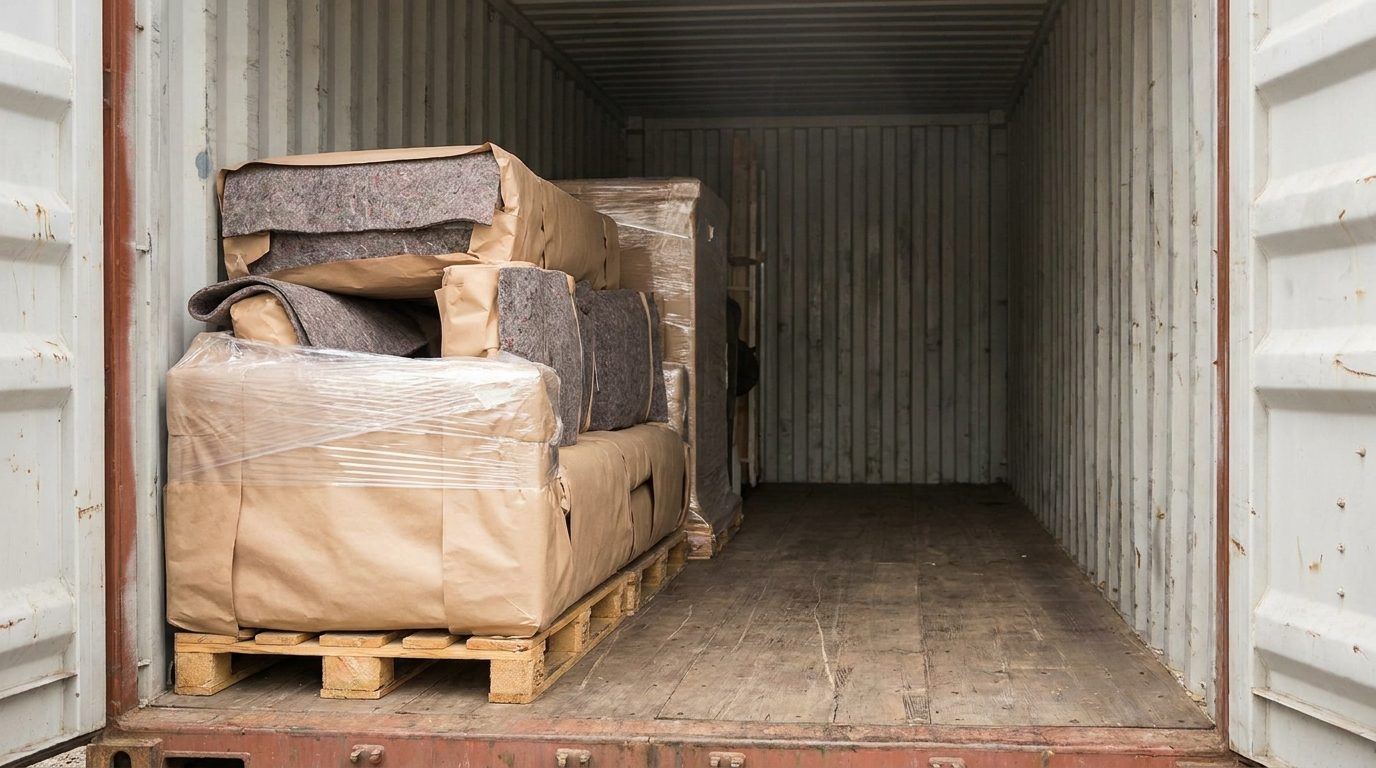
Realistic loading for mixed furniture is 85–90% of nominal, so plan on about 28 CBM in a 20ft, 58–60 in a 40ft, and 65–68 in a 40ft high cube. Irregular shapes, cartons that cannot be stacked, and sofas that will not tolerate weight on top all cost you space. A container of flat-packed panel furniture can beat 90%; a container of assembled armchairs and mirrors will not reach 80%.
Weight is rarely the limit for furniture — a 40ft high cube takes roughly 26–28 tonnes and a full load of furniture is often under 12 — but it becomes one if you fill the gaps with tiles or stone. Watch the axle limits in your own country, which are often stricter than the container's.
Price per cubic metre, the number that decides
Take your all-in freight cost to your port and divide by the CBM you will actually load. If a 40ft high cube costs USD 2,400 door to port and you load 66 CBM, freight is about USD 36 per CBM.
Now apply that to each item. Those loose chairs at 0.342 CBM carry USD 12.30 of freight each; the four-per-carton version carries USD 5.30. On four hundred chairs that is USD 2,800 — more than the difference in factory price between most chairs you were choosing between.
Do this in the showroom, on your phone, before you fall in love with anything. A slightly less pretty chair that ships at half the volume is usually the more profitable chair.
Where the volume hides
Assembled versus knock-down. A dining table with legs attached can be three times the volume of the same table boxed flat with a bolt bag. Most Foshan factories will do either; you have to ask, and you have to ask before the price is agreed, because knock-down costs a little more to pack.
Nesting. Chairs that stack, tables that nest, bed slats that lie inside the headboard carton. Factories rarely volunteer this; a good sourcing conversation asks how the item can be packed differently.
Void filling. The last three or four cubic metres of a container are the most expensive space you will ever buy, because you pay for them either way. Fill them with something small, dense and saleable — lighting, mirrors, cushions, tiles from Nanzhuang twenty minutes away.
Building the loading plan
Ask every supplier for a packing list with carton dimensions, gross and net weight, and pieces per carton. Put them into one spreadsheet, total the CBM, and compare against your target of 65–68 for a 40ft high cube.
If you are 8 CBM short, you are paying to ship air; buy more. If you are 4 CBM over, something is coming out, and it is better to decide which in a showroom than at a warehouse door on loading day.
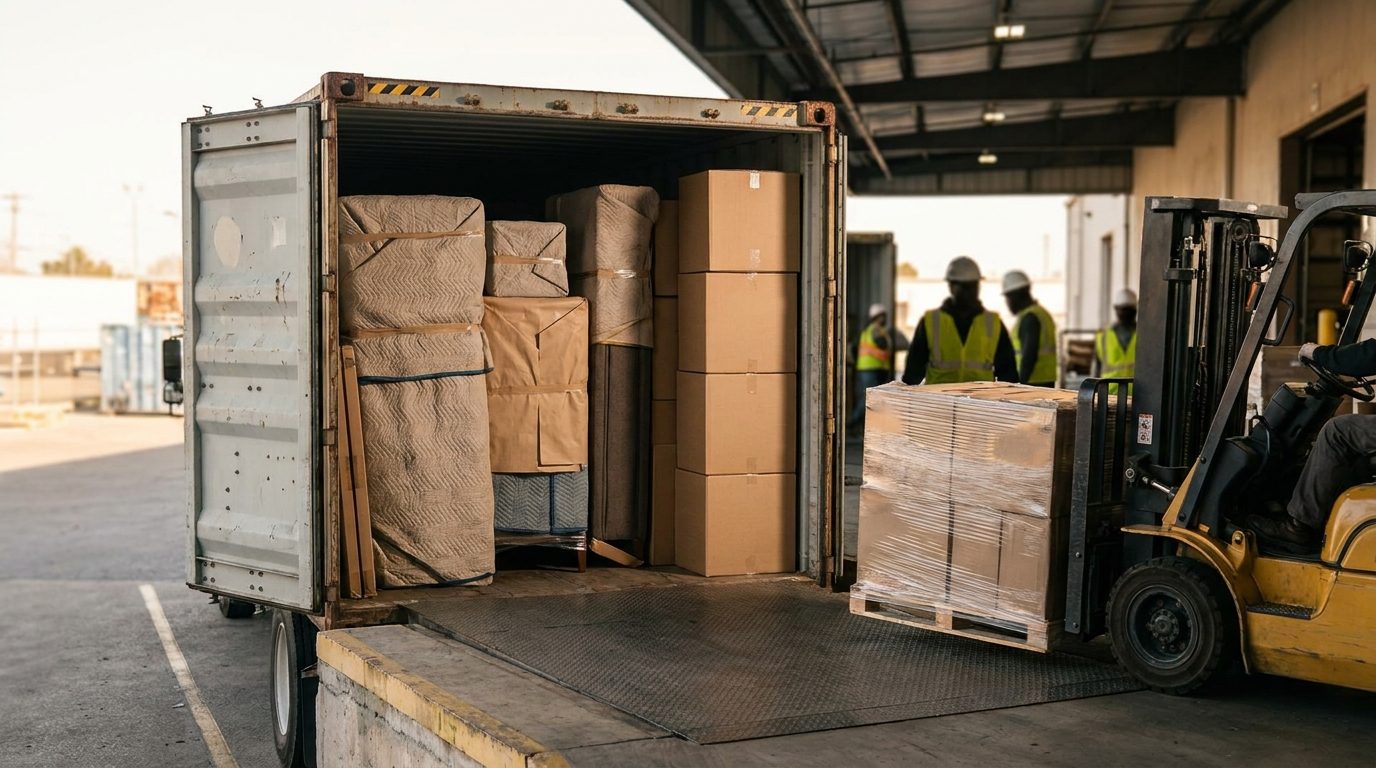
Give the consolidator the same spreadsheet. A loading plan built from real carton sizes — heavy and flat at the bottom, upholstery on top, fragile boxed and braced — is the difference between a tidy container and a damage claim.