20ft, 40ft or high cube: which container for furniture
The three boxes are not priced in proportion to what they hold. For furniture, one of them is almost always the right answer.
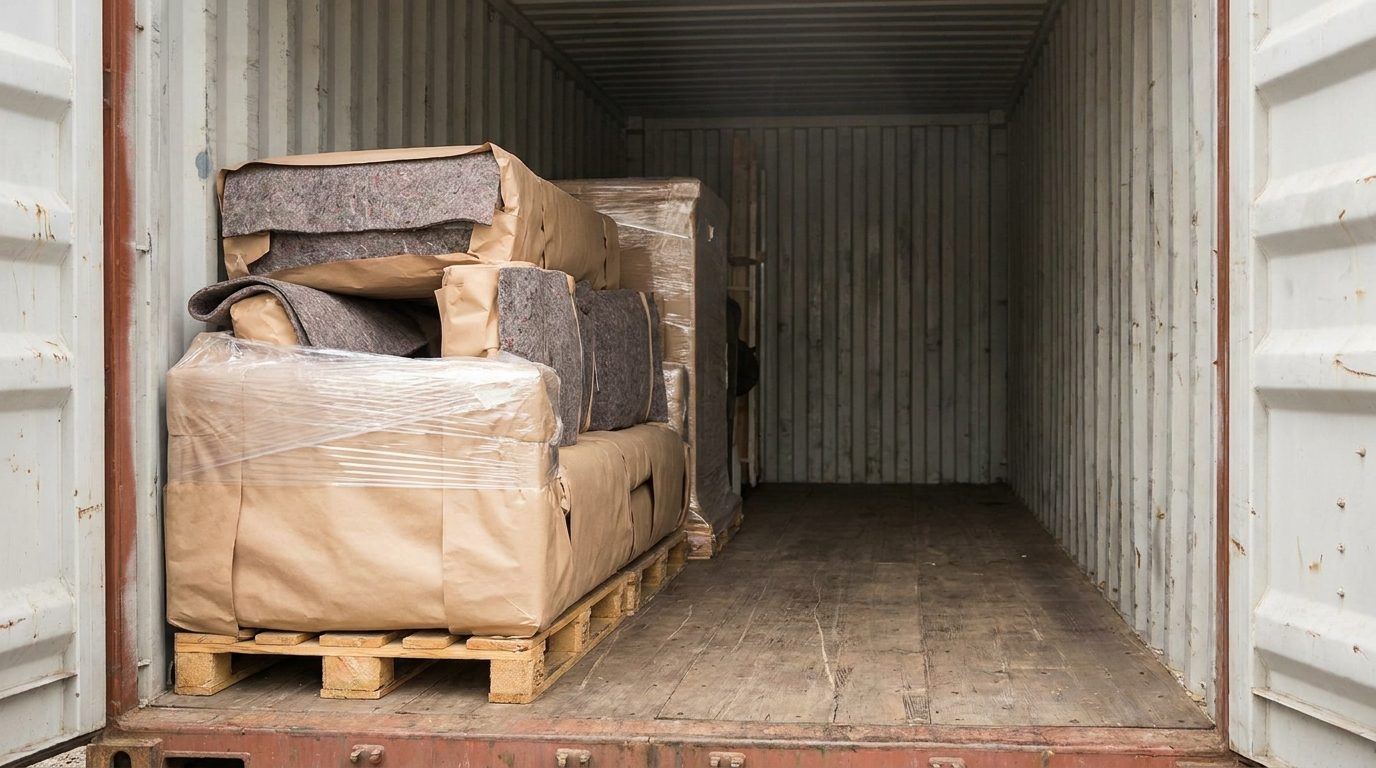
Furniture is light and bulky, which makes container choice a volume question rather than a weight one. That single fact settles most of the decision before you look at a freight rate.
Here is what the three standard boxes actually give you, and when the obvious answer is the wrong one.
The three boxes
20ft standard. Roughly 5.9 × 2.35 × 2.39 m internal, about 33 CBM nominal, realistically 27–29 CBM of furniture. Payload around 28 tonnes, which furniture never approaches.
40ft standard. Roughly 12.03 × 2.35 × 2.39 m, about 67 CBM nominal, realistically 57–60 CBM of furniture.
40ft high cube. Same footprint, 2.69 m internal height instead of 2.39. About 76 CBM nominal, realistically 65–68 CBM of furniture. The extra 30 cm of height is where wardrobes, headboards and stacked chair cartons live.
Why the high cube usually wins
A 40ft high cube typically costs only a small premium over a 40ft standard on the same lane — often five to ten per cent — while giving you roughly 13% more usable volume. On cost per cubic metre it is almost always the cheapest of the three, and for tall furniture the extra height converts into more than 13% because it changes what can be stacked.
Two 20ft containers, by contrast, cost meaningfully more than one 40ft while holding less. The only reasons to choose 20ft are a genuinely small order, a destination with weight-restricted road access, or a delivery address where a 40ft truck physically cannot turn — which is a real constraint for retail addresses in old city centres.
When to size down
If your order comes to 30–40 CBM, you have a decision to make. A 20ft at 28 CBM means leaving goods behind; a 40ft high cube at 66 CBM means shipping half a container of air.
Three ways out. Buy more — fill the space with fast-moving small items, lighting, or tiles, if your cash flow allows it and the goods will sell. Share — consolidate with another buyer through your agent, which is common in Foshan and works well when both parties are flexible on dates. Ship LCL — pay by the cubic metre, which is more per CBM but avoids paying for emptiness.
The break-even between LCL and a full 20ft is usually somewhere around 13–16 CBM depending on the lane; below that LCL wins, above it the box wins.
Practical details that catch people out
Door opening. A high cube's door aperture is about 2.58 m, not 2.69 — the last 10 cm is behind the door frame. Very tall single pieces need to go in before the container is fully packed, or they do not go in at all.
Floor loading. Stone tops, tiles and marble concentrate weight. Spread them along the floor rather than stacking them in one bay, and tell your consolidator, because an unevenly loaded container can fail an axle check at the destination even when the total weight is legal.
Fumigation. If any timber packing or dunnage is untreated, the whole container can be held. ISPM 15 marks on pallets and bracing are cheap; a quarantine hold is not.
A rule of thumb for first-time buyers
If your list is above 55 CBM, book a 40ft high cube and fill it. Between 30 and 55, get a quotation for both a 20ft and a high cube and compare the landed cost per saleable item, not per container. Below 30, ship LCL or wait until you have more to buy.
And build the list against a target volume from the first showroom rather than the last. Buying to a number is how experienced importers avoid both problems at once.