Chinese New Year, and what it does to a furniture order
Factories close for two weeks and take six to recover. Almost every furniture order that arrives badly late is an order that was placed in the wrong month.
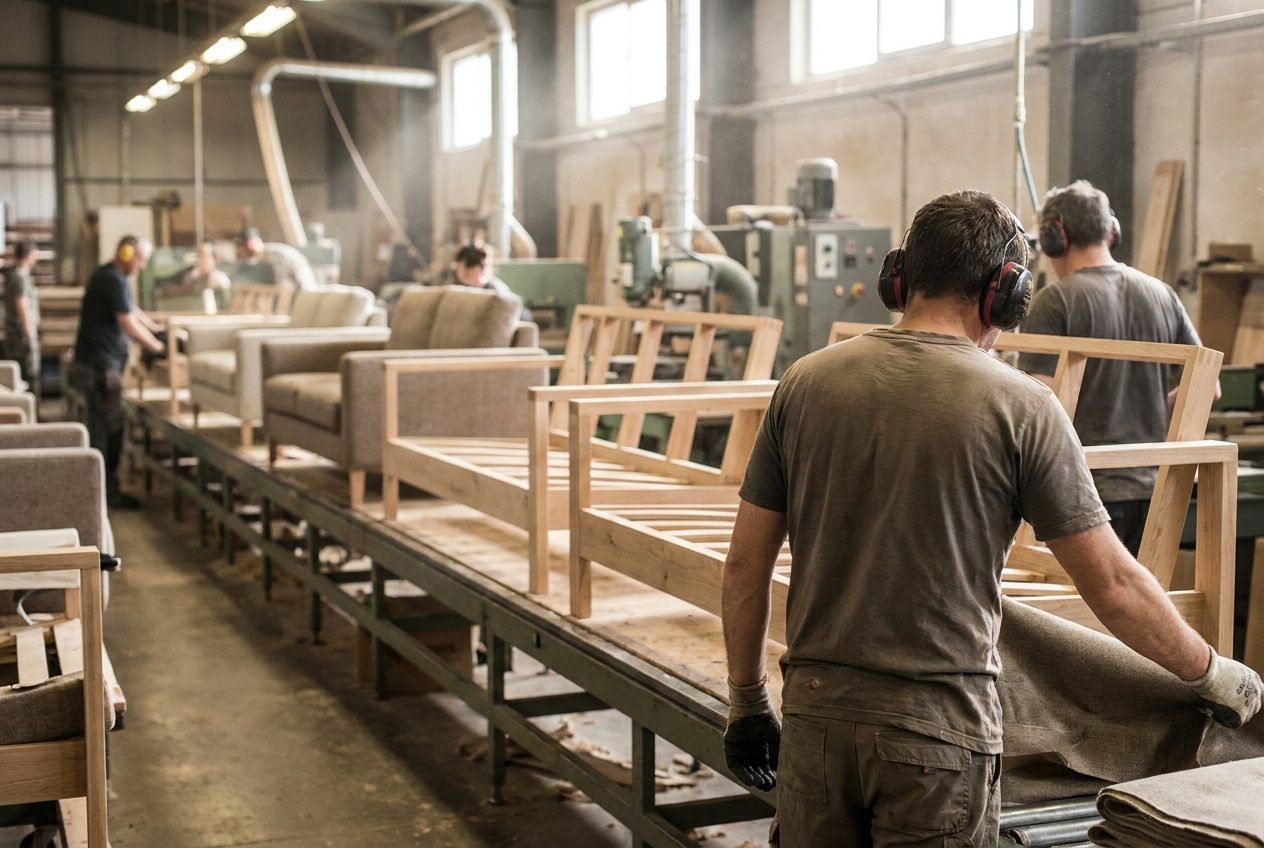
The Spring Festival is the largest annual movement of people on earth, and a furniture factory in Shunde is a building full of people who are all going home at once. The official holiday is a week. The practical effect on your order is much longer than that.
Plan for it and it is a scheduling detail. Ignore it and it is the reason your container misses a season.
What actually happens
The holiday moves with the lunar calendar and falls between late January and mid-February. Around it, a furniture factory goes through four phases.
The rush, three to four weeks before. Every buyer wants goods out before the shutdown. Production lines run flat, quality control gets thinner, and this is where the worst furniture of the year is made. Orders squeezed into this window are the ones with the loose joints and the mismatched finishes.
The shutdown, one to three weeks. Officially about a week. In practice most Guangdong furniture factories close ten to twenty days, and the smaller the factory the longer it stays shut.
The return, two to four weeks. Workers come back gradually. Some do not come back at all — post-holiday turnover in Guangdong furniture plants is significant, and a factory that lost a third of its finishing team is not producing at its old speed or its old standard.
The recovery, four to eight weeks. Backlogs from the shutdown, new staff being trained, raw material suppliers on the same cycle. Lead times quoted in March are frequently optimistic.
The freight problem on both sides
Before the holiday, everyone ships at once. Space is tight, rates rise, and rolled bookings are common — your container is confirmed and then does not load. Book space four to six weeks earlier than usual for a January or early February sailing.
After the holiday, the opposite: ports are quiet for two weeks, then a surge as the backlog moves. Neither week is a good week to be relying on a tight delivery date.
How to place the order
For goods needed before the holiday: place the order at least ten weeks ahead, and write the inspection date into the contract, not just the ship date. Inspect earlier than usual — a defect found three days before the factory closes cannot be fixed for a month.
For goods needed after: place the order before the holiday but schedule production for after it, with the deposit paid before. You keep your place in the queue without your goods being made during the rush, and you are ahead of every buyer who waits until March to start talking.
Never: place a first order with a new factory to be produced in the two weeks before the shutdown. If anything goes wrong there is no time and nobody to fix it.
The trip timing that follows from this
The best months to visit Foshan are March to May and September to November. A November trip gets goods produced in a calm December and shipped before the pre-holiday rush. A March trip catches factories fresh, hungry for orders and willing to negotiate, though you should expect a few weeks of slippage on the first order.
Avoid arriving in the fortnight before the festival: markets empty out, factory owners are distracted, and half the showrooms you wanted to see are closing early. Avoid the fortnight after, when almost nothing is open at all.
The other date to keep off your calendar is the first week of October — the National Day golden week — which closes factories for a shorter but similar version of the same problem.
A sentence for your contract
Write it plainly: production to be completed and goods inspected no later than [date]; the Chinese New Year holiday period is included within the stated lead time and is not grounds for extension.
Factories accept this readily when the schedule is realistic, and it moves the conversation about the holiday to the moment when it can still change something — before you pay a deposit rather than after you have missed a season.