Visiting the Louvre centre
The top of the Lecong market, and the most useful hour of a first day even for buyers who will never order here.
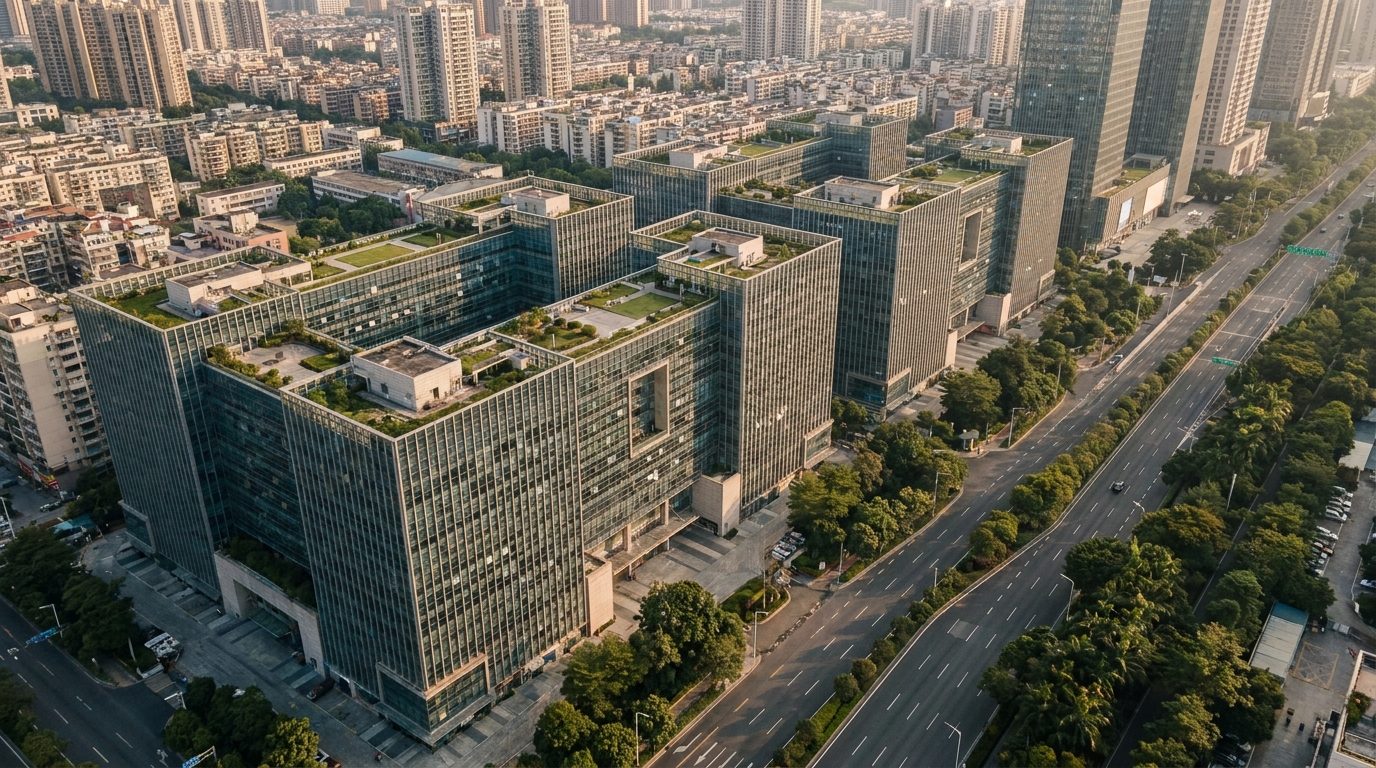
Of all the buildings in Lecong, this is the one people describe when they get home. It sits at the upper end of the market, it is very large, and it is presented with a level of polish that surprises visitors who were expecting a wholesale hall.
What it holds
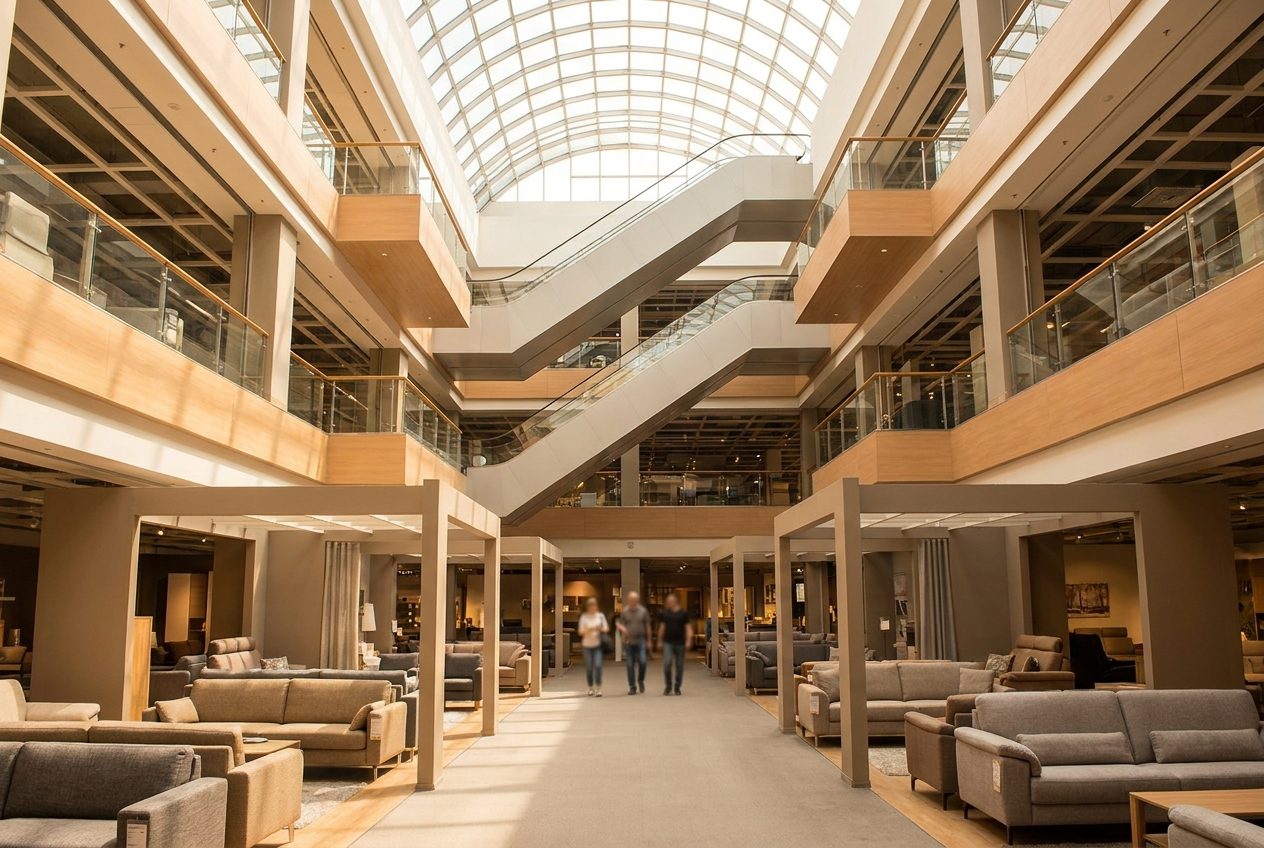
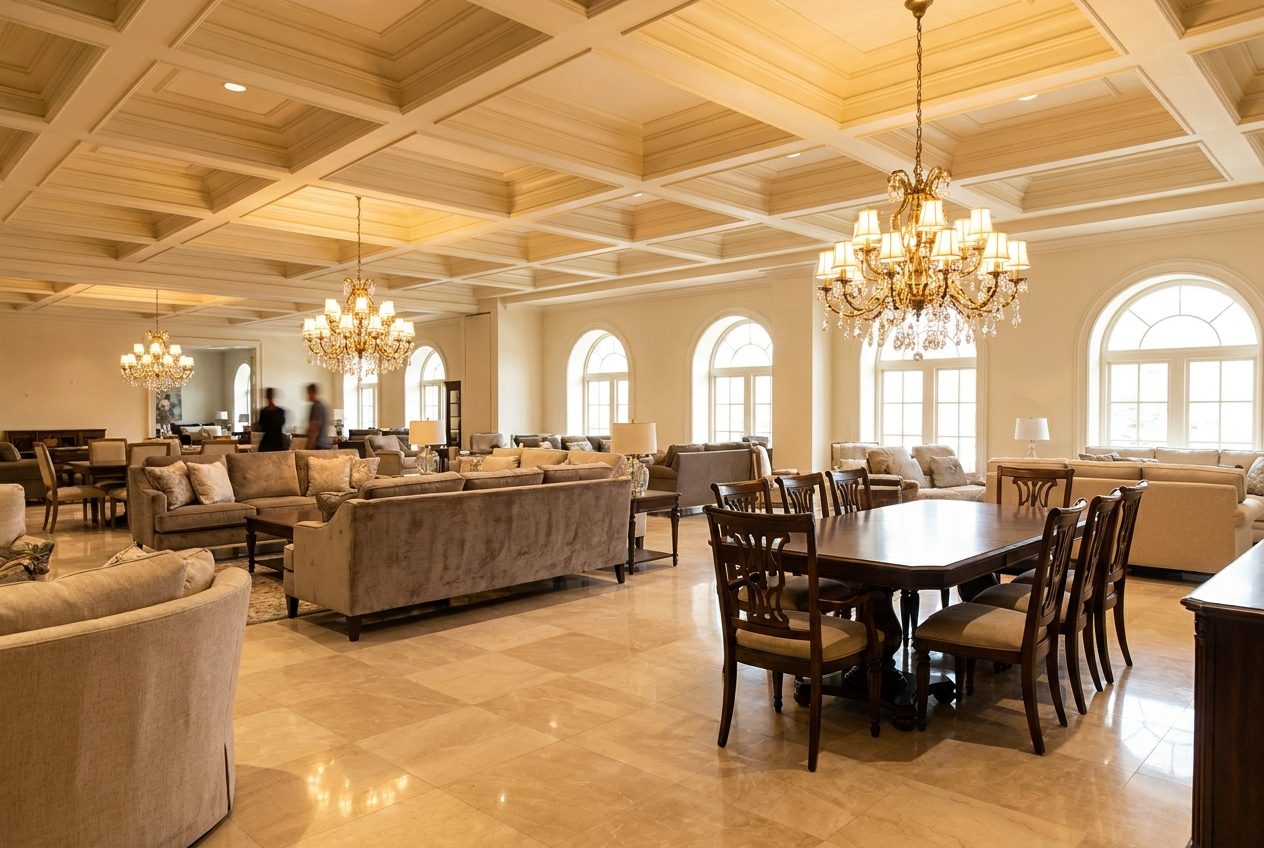
Furnishings across the premium end of the range: upholstery, dining and bedroom, case goods, lighting, decorative pieces and the accessories that finish a scheme. Alongside a large body of domestic brands there is a substantial imported presence, and the whole is arranged in themed areas rather than as an undifferentiated grid of booths.
The building carries a national 4A tourist attraction rating, which tells you something useful about how it is run: the presentation is closer to a retail destination than a trade hall, and it draws sightseers as well as buyers.
Why to go even if you will not buy there
This is the most valuable hour available to a first time buyer in Lecong, and it has nothing to do with the price list. Walking a floor of very well executed furniture recalibrates your eye. You see how a seam should sit, how a drawer should close, how a finish looks when it has been done properly and how a veneer edge looks when it has not.
Take that reference into a mid market hall an hour later and your judgement improves immediately. You stop comparing pieces to each other and start comparing them to a standard. Buyers who skip this step tend to overpay for presentation and underpay attention to construction.
Who it genuinely suits
- Designers and studios specifying for high end residential or boutique hospitality.
- Retailers positioning at the top of their local market, particularly where imported European product sets the local benchmark.
- Project buyers looking for signature pieces for public areas, where a lobby has to make an impression that the guest rooms do not.
How to use it well
Go first, not last. Go on a weekday if you want conversation rather than crowds. Photograph construction details, not just whole pieces, because the details are the thing you are trying to remember. And note the model codes, because a piece seen here often has a close relative at a very different price two buildings away, and finding that relative is much easier when you can describe exactly what you are looking for.
A fair word about price
Things here cost what they cost because of the finish, the materials and the setting, and that is a legitimate offer for the buyer it is aimed at. It is not the right building for a container of volume lines, and nobody there pretends otherwise. Knowing that before you walk in makes the visit far more useful, because you go in to learn rather than to negotiate.
Common questions
Is the Louvre centre only for luxury buyers?
It is built around the upper end, but it is useful to everybody. Buyers working at other price levels visit it to set a reference for finish quality and to see where design is heading, then buy in the halls that match their budget.
Can you buy directly there?
Yes, it is a working trading centre rather than a museum. It also holds a national 4A tourist attraction rating, so it draws visitors who are there to look rather than to order, which is worth knowing if you want a serious conversation on a busy weekend.
How long should I allow?
One to two hours if you are calibrating. Considerably longer if you are actually buying at this level, because the depth of the building rewards it.