Planning a container trip
A container is a volume problem before it is a shopping problem, and the planning starts in the first showroom.
Most people arrive in Foshan thinking about pieces. A container thinks in cubic metres. Making that switch early, ideally in the first showroom rather than the last, changes which products end up on the list and usually improves the economics of the whole shipment.
Volume is the real currency
Furniture is bulky and comparatively light, so a furniture container almost always fills up on space long before it approaches a weight limit. That single fact reshapes a buying list. A piece that ships flat, or that nests, or that has removable legs, earns its place twice: once on the showroom floor and again in the loading plan.
Ask for packed dimensions on every quotation, not product dimensions. The difference between the two is the packaging, and packaging is what you are actually shipping.
Mixing suppliers
Very few buyers fill a container from one showroom, and there is no reason to. Goods from several suppliers are brought together at a consolidation warehouse, checked, and loaded as one shipment. It is an ordinary arrangement in a district built around exactly this.
The part that needs managing is the calendar. A container leaves when the last supplier is ready, so a single workshop running two weeks behind holds up everything else, including the goods that were finished on time. Lining lead times up at the point of ordering, rather than discovering the mismatch later, is most of the work.
The loading plan
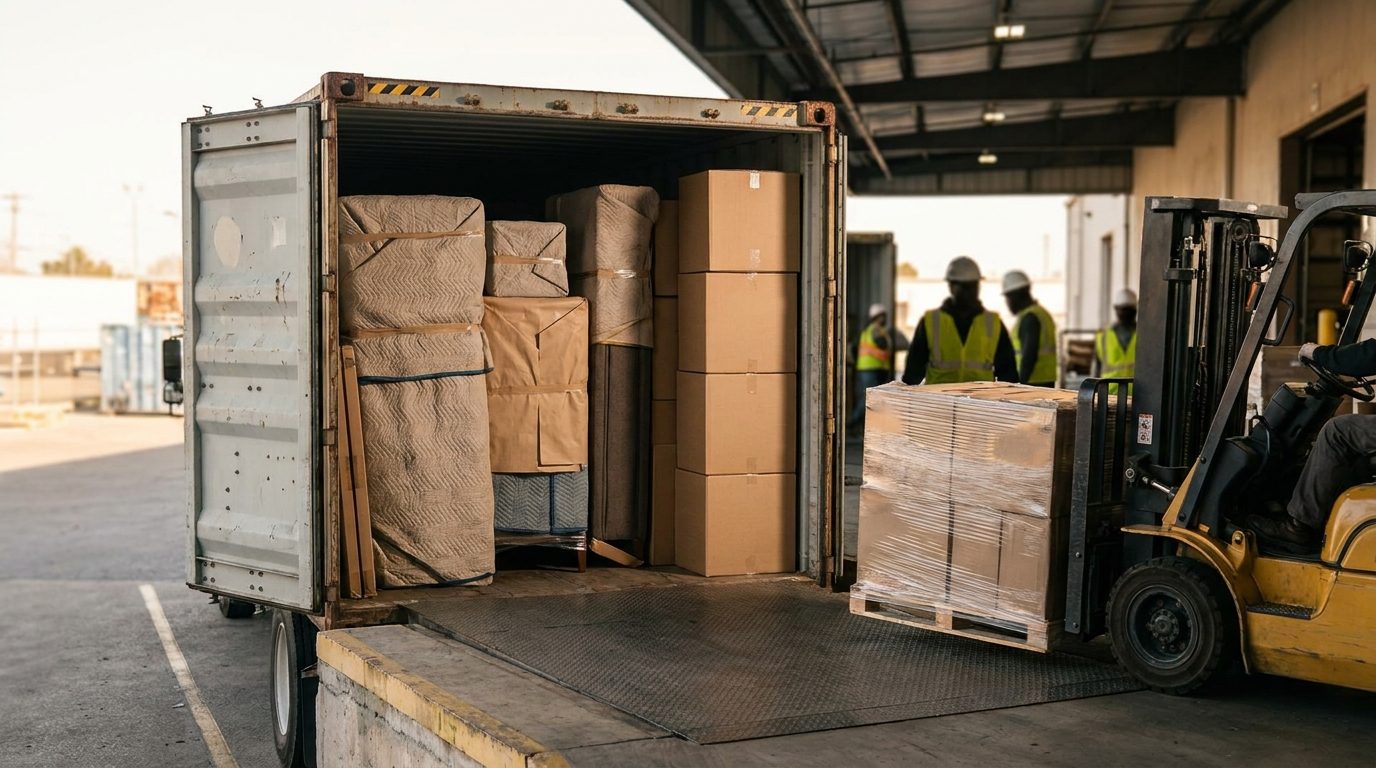
A good loading plan is not just stacking. Heavy and flat at the bottom, fragile high, upholstery kept away from anything with a hard edge, and the whole thing packed tightly enough that nothing can move. A container that is three quarters full and loose will arrive in worse condition than one that is completely full and snug, which is the opposite of what most people expect.
Where damage actually comes from
Rarely from the sea. Overwhelmingly from movement inside the box and from thin protection at the corners and edges. Look at how a supplier packs before you look at how they discount. Corner protectors, sufficient foam, film that actually holds, and cartons that are not reused past their useful life are worth more over a year of shipments than a small saving on the unit price.
This is the part where having someone check the goods at consolidation, before the doors close, changes the outcome. Once a container is sealed, everything is a claim rather than a fix. Before it is sealed, a badly wrapped item is a five minute problem.
Things worth deciding before you buy
- One category or a mix. A container of dining sets is simple. A container of eleven different things is a logistics exercise, and worth planning as one.
- Spares. A few extra fixings, glass shelves or fabric offcuts cost very little now and are expensive to obtain later.
- Labelling. Cartons marked so your own warehouse can unload without opening everything is a small ask that saves a full day at the other end.
- Photographs at loading. Normal practice, and worth asking for, because it makes any later conversation short and factual.
Getting the last few cubic metres right
There is nearly always a gap at the end, and it is a genuine opportunity. Small, high turnover, easily packed items fill it well. Buyers who plan for that gap rather than discovering it tend to bring back an extra category and find out cheaply whether it sells.
Common questions
Can I mix suppliers in one container?
Yes, and most buyers do. It usually means consolidating everything at one warehouse before loading, which is a normal arrangement in the district. The thing to plan for is timing: the container loads when the slowest supplier is ready, so lead times need to be lined up rather than assumed.
How do I know if I have enough to fill one?
By volume, not by piece count. Every quotation should carry the packed dimensions, and those numbers added together tell you where you are. Furniture is bulky and light, so buyers usually run out of space long before they run out of weight allowance.
What most often goes wrong?
Packing, by a wide margin. Not the goods themselves. A container that is loaded tightly with well protected corners arrives in a very different condition from one where things shifted for several weeks at sea.