Inspection before shipping
Most furniture problems are visible before shipping and invisible after it. The checks that matter take minutes.
The good news about furniture is that most of what goes wrong is visible to an ordinary person standing in front of it. You do not need instruments. You need a few minutes per piece and a habit of looking at the parts nobody displays.
In the showroom
The display piece is the best one the workshop has made, so treat it as the ceiling rather than the average. Even so, it tells you a lot.
- Lift a corner. Weight tells you about the frame. A sofa that lifts too easily is worth asking about.
- Look underneath. The underside is the part nobody finishes for show. Staples, webbing, the frame joints and whether the timber looks dry and clean are all visible there.
- Press the seat, then watch it. Good foam returns. Foam that stays dented in the showroom will be flat in a year.
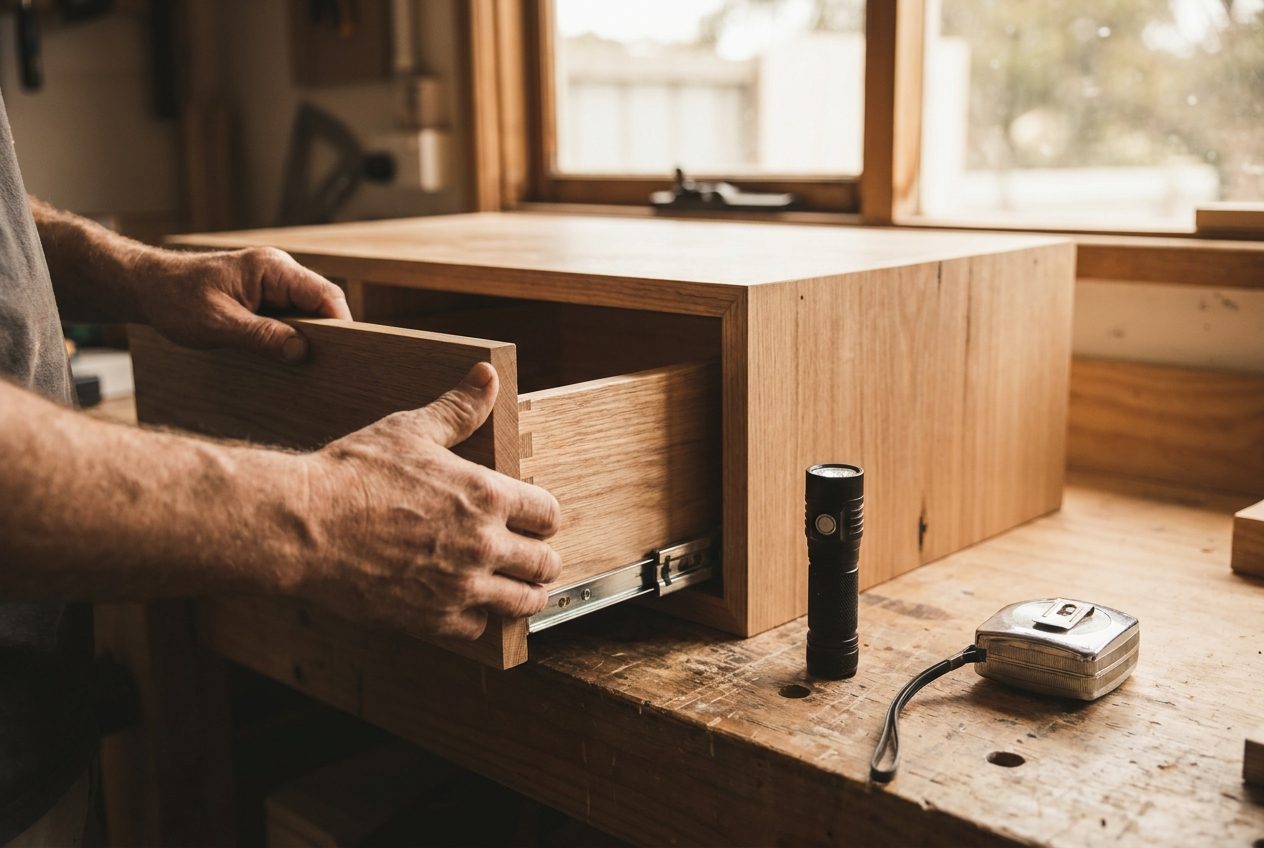
- Open every drawer and door. Twice. Runners and hinges are where cost gets saved quietly, and a drawer that drags in a showroom will not improve.
- Run a hand along the edges. Edge banding and finish quality on the parts nobody photographs is the truest signal in the building.
- Look at the back panel. On case goods, the back is where the difference between careful and quick is most obvious.
Questions worth asking while you are standing there
What is the frame made of and is it kiln dried. What density is the foam. Is the fabric from stock or ordered in. Is the finish sprayed here. Is this piece made in your own workshop. What is in the packing. Every one of those gets a straight answer far more often than buyers expect, and the pattern of the answers tells you as much as the content.
Before the container is sealed
This is the inspection that matters most and the one most often skipped. Goods from several suppliers arrive at one warehouse, and for a short window everything is in one place, unpacked or repackable, with time to fix problems. After that window it is a claim, a photograph and a long conversation.
The checks are simple. Do the quantities match. Do the finishes match each other across the batch, not just the sample. Is the packing intact, with corners protected. Are the cartons marked so your warehouse can unload without opening everything. Have any pieces been substituted.
Somebody has to be physically present to do this. It is the clearest example on a whole trip of a small local cost preventing a large distant one, because the difference between a wrapped corner and an unwrapped one is a few minutes at the warehouse and a damaged arm at the other end.
Consistency across a batch
A single perfect sample proves the workshop can make it. It does not prove they can make it eighty times. Colour drift in timber finishes and dye lot variation in fabrics are the usual culprits, and both are normal manufacturing realities rather than anyone acting badly. They are managed by fixing a control sample, keeping it, and checking production against it rather than against memory.
What to do when something is wrong
Raise it early, specifically, and with a photograph. Suppliers here deal with corrections routinely and most would far rather fix something before it ships than argue about it afterwards. The buyers who get problems solved quickly are the ones who describe the problem precisely and give the workshop a chance to put it right while the goods are still in the building.
Common questions
Can I check quality myself without technical training?
A great deal of it, yes. Lifting a piece, opening every drawer, looking underneath and pressing on a seat cushion will tell you more than most people expect. The technical checks matter for volume orders, but the simple ones catch the majority of real problems.
When should goods be inspected?
Before the container is sealed. Once the doors close, a problem becomes a claim rather than a repair. Checking at consolidation, when everything from every supplier is in one place, is the single most useful inspection point in the whole process.
What is the most common problem?
Damage caused by packing rather than by manufacturing, by a wide margin. The second most common is inconsistency across a batch, particularly in finish colour.