Which Foshan market to visit
The district is large and the centres are not variations on each other. This is how to choose which ones deserve your days.
Foshan is not one furniture market. It is a district of them, concentrated in and around the town of Lecong in Shunde, with manufacturing spread through the towns behind. Understanding how the pieces relate to each other is most of what a first visit is for, and it is the thing that turns a confusing week into a productive two days.
The shape of the district
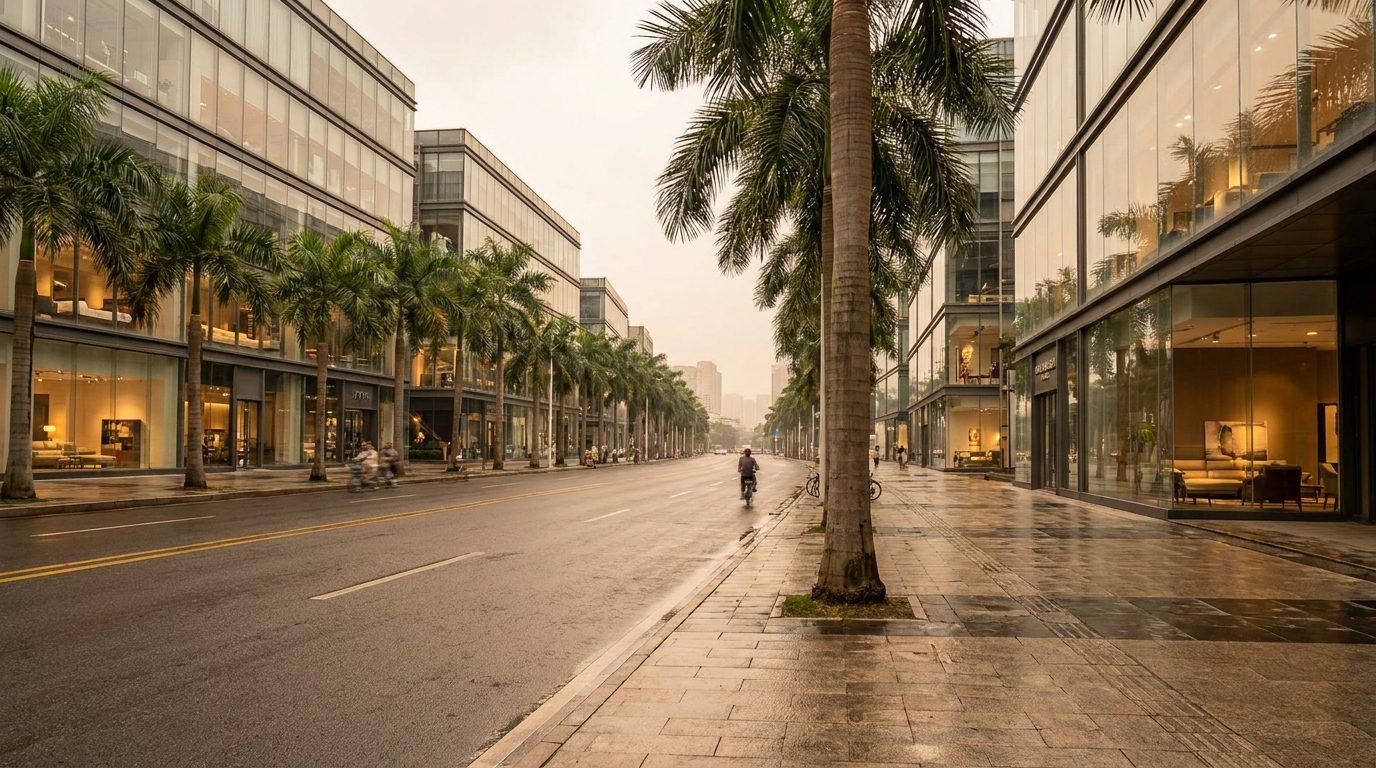
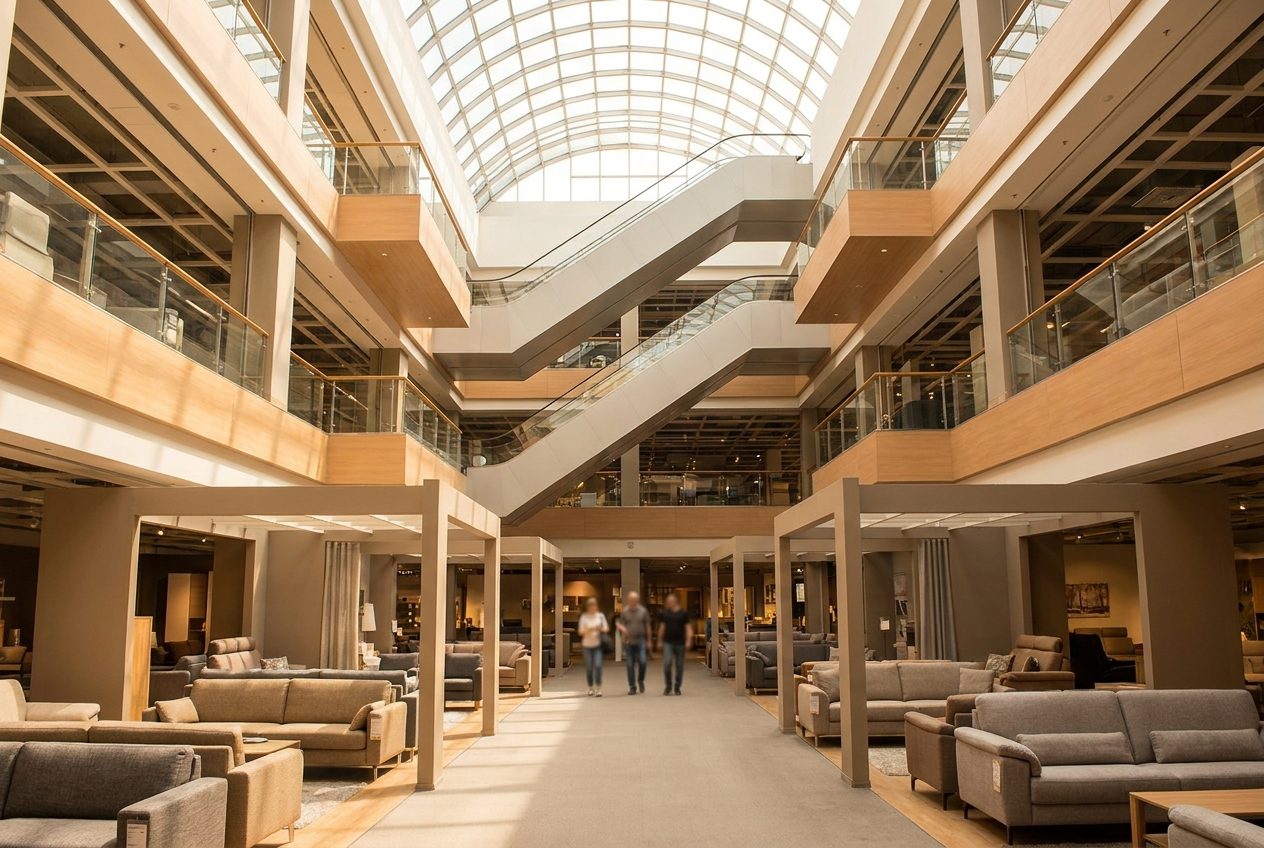
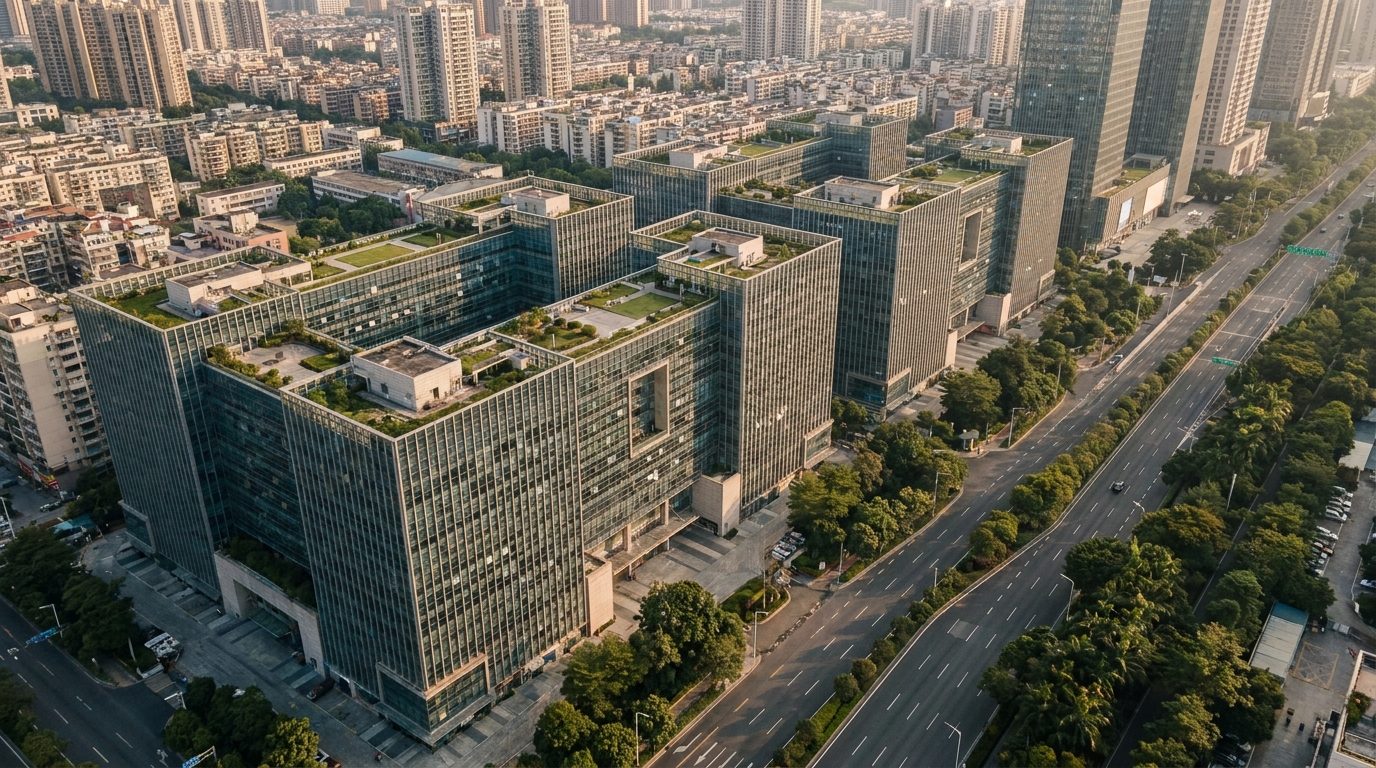
The core of it runs along a main road, with large exhibition centres and malls set back on both sides for kilometre after kilometre. Some are single enormous buildings with hundreds of showrooms inside. Others are clusters that have grown together over the years until the boundary between one and the next is more of an address than a wall.
Behind and around that retail strip, mostly toward Longjiang and the towns near it, sit the workshops. That adjacency is the district’s real advantage: the distance between seeing a sofa and seeing it built is usually a short drive rather than a separate trip.
How the centres differ
Three things separate one centre from another, and none of them is size.
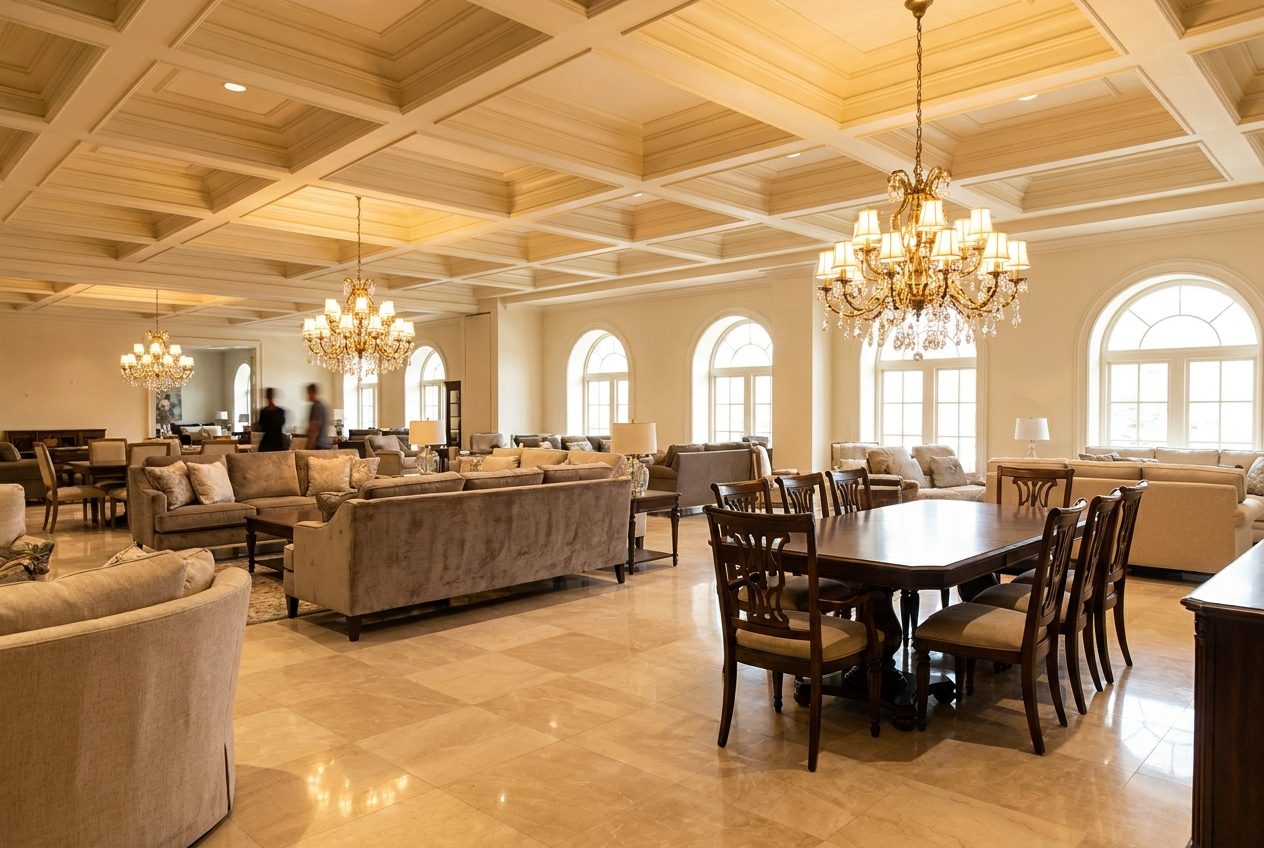
- Price level. Some buildings are built around the upper end, with the finishes and the rents to match. Others are working halls where volume lines move.
- Category depth. A centre that runs deep on office furniture is not simply a general mall with an office floor. The suppliers, the visitors and the whole tenancy are different.
- Who the tenant is. Some showrooms belong to the workshop that makes the product. Others belong to trading companies representing several workshops. Both are legitimate and useful, and they behave differently on price, on modifications and on lead times.
A sensible order to walk them
Start high, then work down. An hour in a top end centre is the cheapest education available in the district, because it sets your reference for what good execution looks like. Everything you see afterwards is easier to judge, and you become much harder to persuade with a photograph.
Then move to the halls at your own price level and spend real time there. Finish, if you have a third stop in you, somewhere specialised: office, outdoor, or whatever your category actually is.
Choosing which ones to skip
This is the part nobody writes down and it is worth more than the rest. Most buyers only need three to five centres, and knowing which ones are irrelevant to your category saves more time than any other decision on the trip. A buyer looking for dining sets can walk past a great deal of Lecong without missing anything. A buyer fitting out offices can ignore most of the residential floor space entirely.
Individual guides on this site take the main centres one at a time and say plainly what each holds and who it suits, so the skipping can be done in advance rather than on foot.
What surprises most first time visitors
The scale, obviously. But more usefully: how much is standing in stock rather than made to order, how willing many suppliers are to adjust a detail, and how much the day improves once you stop trying to see everything. The buyers who enjoy Foshan are the ones who accepted early that they would see a fraction of it, and chose the fraction carefully.
Common questions
How many furniture malls are there in Foshan?
More than most people expect. The trading area around Lecong is commonly described as one of the largest in the world, with well over a hundred separate malls and exhibition centres along and around the main road. The practical number for a buyer is much smaller: for any one category, three to five centres will cover almost everything you need to see.
Which market is the cheapest?
Price tracks the building, but it tracks the supplier more. Older halls tend to carry keener pricing on volume lines, while newer centres carry more design and more finish options. The same frame can appear at different prices in two buildings a kilometre apart, which is exactly why comparing across centres is worth a day.
Do I need an appointment?
Not to walk the malls. They are open trading centres and you can browse freely. Factory visits are different and do need arranging in advance.
Is everything wholesale only?
Most showrooms are set up for trade quantities, but a good number hold standing stock and will sell smaller lots. Whether that suits you depends on shipping: a handful of pieces is worth buying only if you can consolidate them into a larger shipment.