Insuring a furniture container properly
Insurance on a container costs about the price of one dining set. Buyers skip it, then discover that the carrier's liability is calculated by weight, which for furniture is close to nothing.
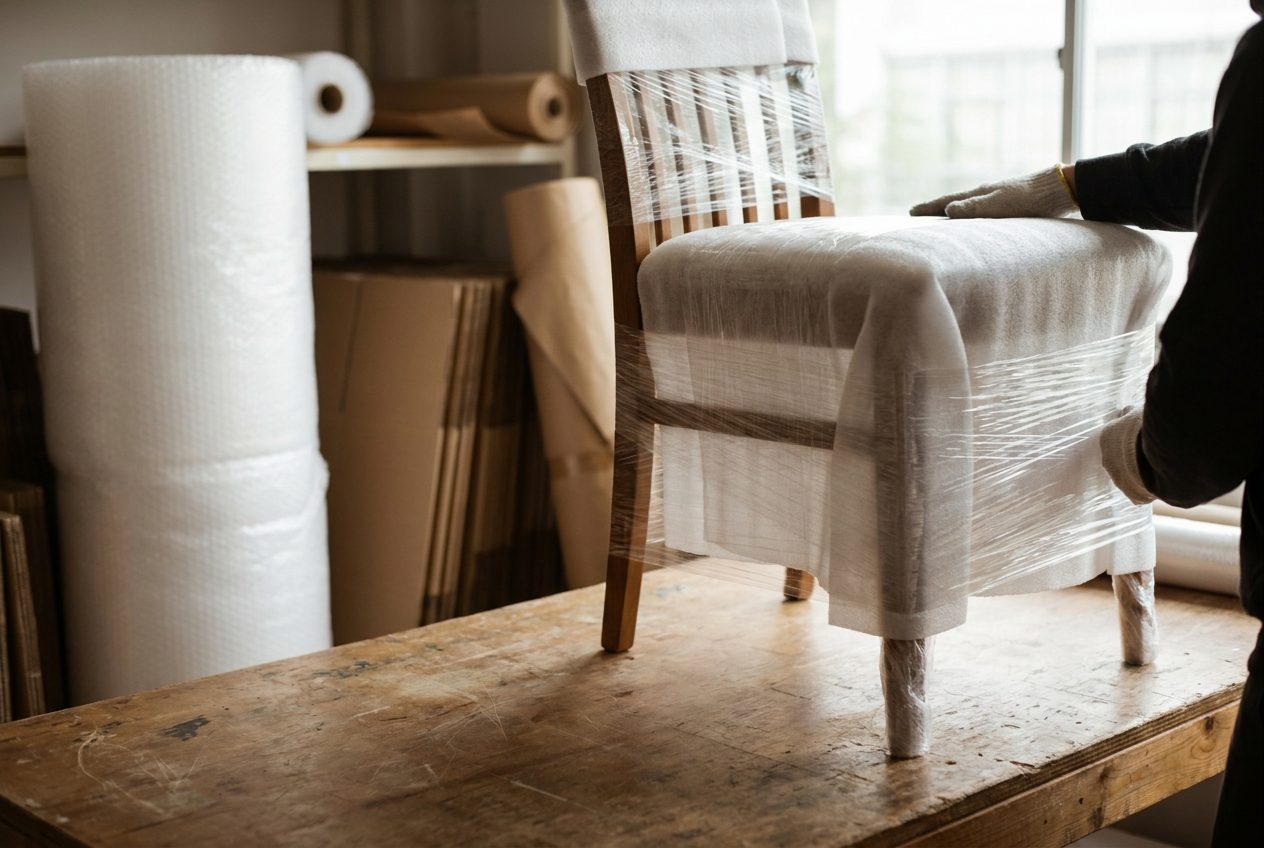
Furniture rarely sinks. It arrives crushed, scuffed, water-marked or short a few cartons, and that is precisely the class of loss that the shipping line will not pay for in any meaningful way.
Understanding why turns insurance from an optional line item into an obvious one.
Why the carrier will not cover it
A shipping line's liability under the Hague-Visby rules is capped at roughly 2 SDR per kilogram or 666.67 SDR per package, whichever is greater. Special drawing rights move, but the shape of the answer does not: liability is weight-based, and furniture is light.
A wardrobe that retails for USD 900 might weigh 45 kg. At about 2 SDR per kilo you are looking at roughly USD 120 of carrier liability — and only if you can prove the line caused the damage, which in a sealed container is very hard.
That gap is what marine cargo insurance exists to fill.
What to buy
Ask for Institute Cargo Clauses (A) — all risks — for the whole journey, warehouse to warehouse, insured for CIF value plus 10%. All-risks cover is not literally all risks, but it covers accidental physical loss or damage from external causes, which is what happens to furniture.
Clauses B and C are named-perils cover: fire, stranding, general average, collision. They will not pay for the handling damage that accounts for most furniture claims. If someone quotes you a very cheap premium, check which clause set it is written on.
Typical all-risks premium for furniture is around 0.25% to 0.6% of insured value, so USD 100–250 on a USD 40,000 container. Check the deductible: a policy with a USD 500 excess will not respond to the three broken mirrors that make up a normal claim.
Why not to rely on the seller's CIF cover
Under CIF, the seller must insure — but only to the minimum, which is Clauses C, and only for 110% of invoice value. The policy is in the seller's name, and getting a claim paid through a policy you did not buy, in a language you do not read, from a broker you have never spoken to, is a poor way to spend a month.
Buy FOB and arrange your own cover. It costs a little more in premium and a great deal less in aggravation, and the policy responds to you.
Exclusions that matter for furniture
Insufficient packing is excluded from every policy in existence. If a carton was single-wall and the contents were crushed, the insurer will decline, and it will be right. This is the practical link between packing specification and insurability.
Inherent vice — timber that cracks because it was kiln-dried to the wrong moisture content for your climate — is excluded. That is a quality claim against the factory, not an insurance claim.
Delay is excluded, including consequential loss from a missed selling season.
Mould and condensation sit in a grey area. Container rain is real in the South China summer, and if you are shipping to a humid destination, ask about desiccant bags and confirm the policy responds to wetting damage.
Making a claim that gets paid
Photograph the container seal number before opening, then the doors open with the load intact, then each damaged item in place before it is moved. Note damage on the delivery receipt before you sign it — an unqualified clean receipt undermines every claim that follows.
Notify the insurer and the carrier in writing within three days. Keep the packaging until the surveyor has seen it, because the packaging is the evidence that determines the insufficient-packing exclusion.
Then send the claim with the commercial invoice, packing list, bill of lading, the pre-shipment inspection report and the photographs. A file assembled like that is settled in weeks. One assembled from memory is argued about for months.