LCL or FCL: shipping less than a full container
Shared containers look like the sensible answer for a small first order. They are — up to a point, and only if you pack for them.
Not every buyer starts with sixty-eight cubic metres. Plenty of good businesses start with eight, and the question is whether to pay by the cubic metre in a shared box or find a way to fill your own.
The arithmetic favours sharing for small volumes. The physics does not, and that is the part that gets left out of the conversation.
How LCL actually works
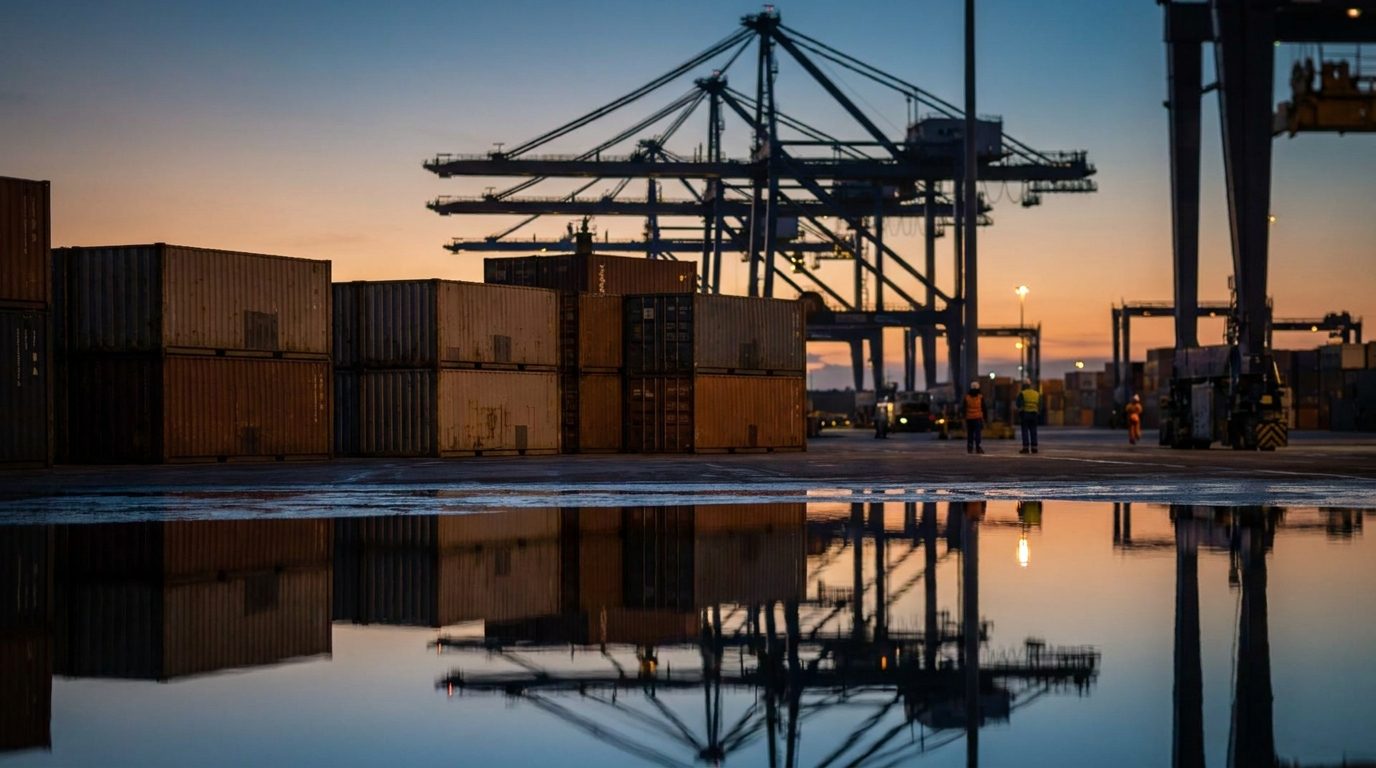
Your cartons are trucked to a consolidation warehouse near the port, where they are stacked with other people's cargo into one container. At the destination the container is unpacked at a deconsolidation warehouse and your cartons wait for you to clear and collect them.
You pay per cubic metre, or per tonne if your goods are dense — the greater of the two, which for furniture is always volume. On top of the sea freight there are origin CFS charges, destination CFS charges, documentation and handling. Those fixed costs are why a two-cubic-metre shipment can cost nearly as much as a five-cubic-metre one.
Where the break-even sits
Typical break-even against a full 20ft container is 13–16 CBM, varying by lane and season. Below that, LCL is cheaper. Above it, you are usually better off buying more furniture and taking the box.
Compare on landed cost per cubic metre, all charges included at both ends, not on the sea freight line. LCL quotations that look cheap frequently carry destination charges two or three times the origin charges, and those are payable before you can collect anything.
Ask specifically for destination CFS, handling, documentation and any deconsolidation fee in writing before you book. A forwarder who will not quote destination charges at booking is not quoting you a price.
The damage risk nobody mentions
In a full container your goods are loaded once, by people you can instruct, and unloaded once, at your warehouse. In LCL they are handled at least four extra times, stacked against strangers' cargo, and quite possibly with somebody's steel or tiles on top of your wardrobe.
Furniture damage rates in LCL are meaningfully higher than in FCL, and the goods that suffer most are exactly the ones buyers ship first: mirrors, glass tops, high-gloss finishes, assembled upholstery.
This does not make LCL wrong. It makes packing non-negotiable.
Packing for a shared container
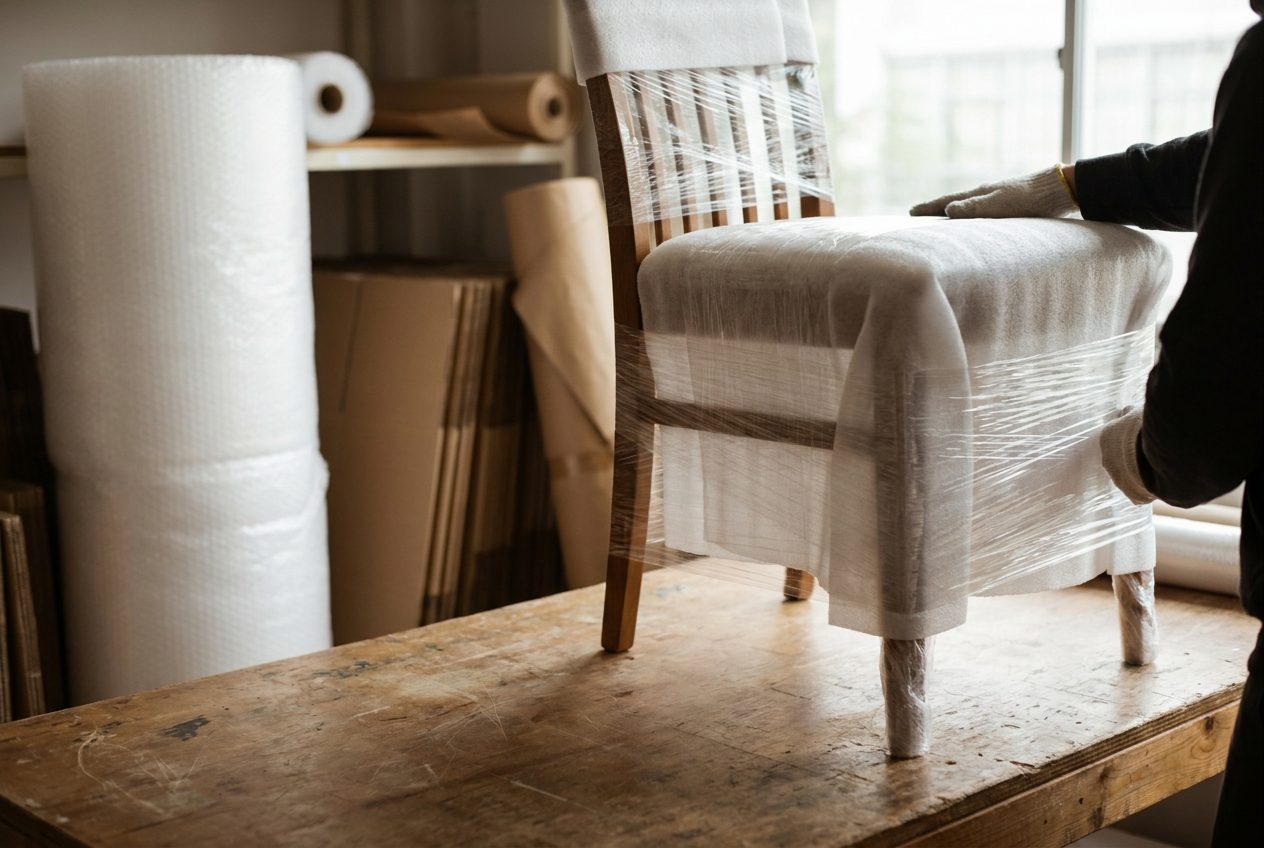
Tell the factory the shipment is LCL and ask for export packing accordingly. In practice that means: double-wall cartons rather than single; corner protectors on anything with edges; foam or honeycomb board against flat surfaces, not just paper; plywood crating for glass, stone and mirrors, with the crate marked as fragile on all four sides in English and Chinese.
Palletise where you can. A shrink-wrapped pallet is handled by a forklift; a loose carton is handled by a person in a hurry. Pallets cost volume — usually 12–15 cm of height — but on a small shipment that is a good trade.
Ask for cartons to be numbered against the packing list, 1 of 24 through 24 of 24. Missing cartons are far more common in LCL than in FCL, and a claim without numbered cartons is a conversation without evidence.
The Foshan alternative
There is a third option that buyers often miss: consolidating with another buyer through your agent. Two eight-cubic-metre orders in one 20ft is cheaper per cubic metre than two LCL shipments, and the goods are handled once rather than four times.
It requires flexibility on the shipping date and a clear split of the freight cost agreed in advance. In Foshan, where agents are handling several buyers at once, it is easier to arrange than most people expect — worth asking about before you accept an LCL rate.