Incoterms, and which one to ask a furniture factory for
Three letters at the end of a quotation decide who pays for what, who insures the goods, and who is standing there when something goes wrong. Most first-time buyers get quoted the wrong one.

A Lecong showroom will quote you a number. Whether that number is good depends entirely on three letters printed next to it, and those three letters are the most misunderstood part of importing furniture.
Incoterms do not set the price. They set the point on the journey where the seller stops paying and stops being responsible, and you start. Move that point and the same furniture has three different prices, none of which is a discount.
EXW — ex works
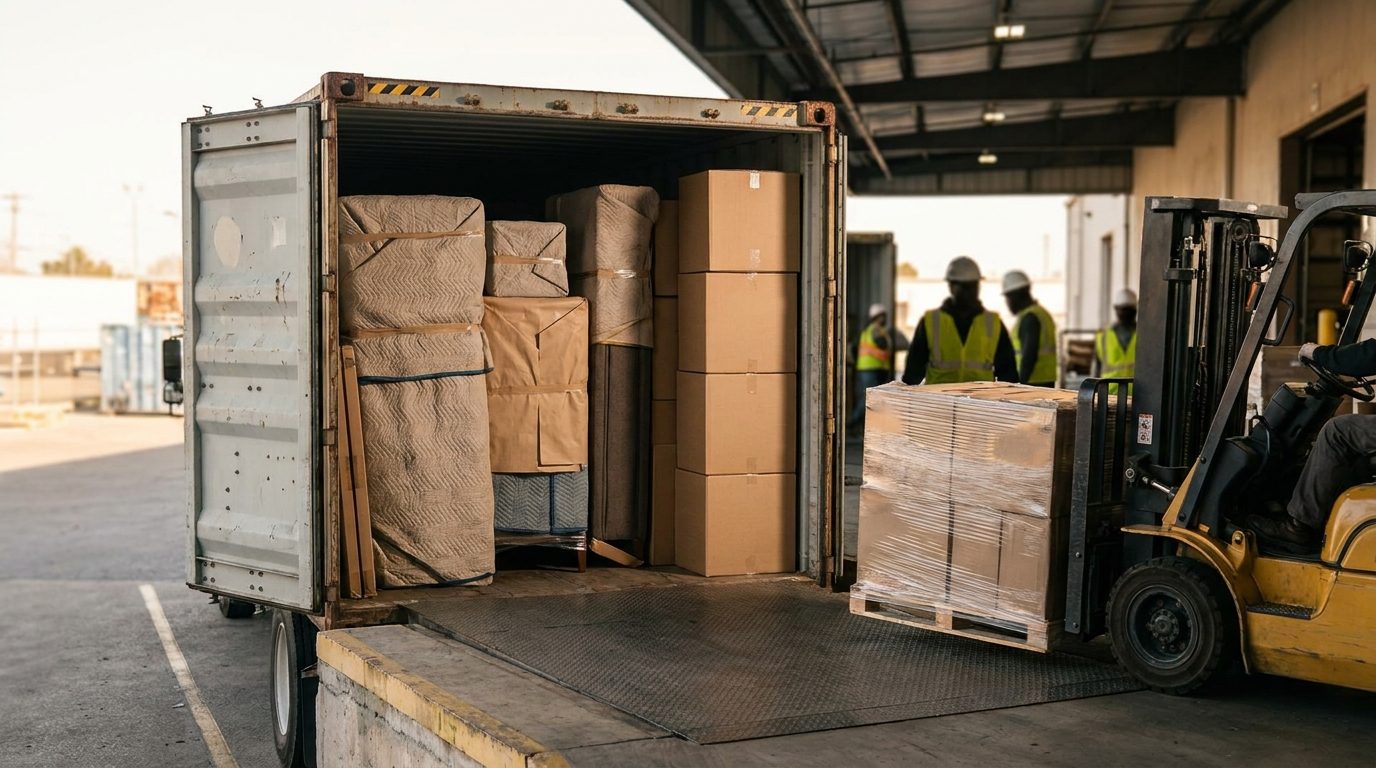
EXW means the goods are yours at the factory gate. The seller does nothing else: not loading, not export clearance, not the truck to the port. In theory it is the cheapest number on the page; in practice it is the most dangerous one for a buyer who does not already have a freight forwarder in Guangdong.
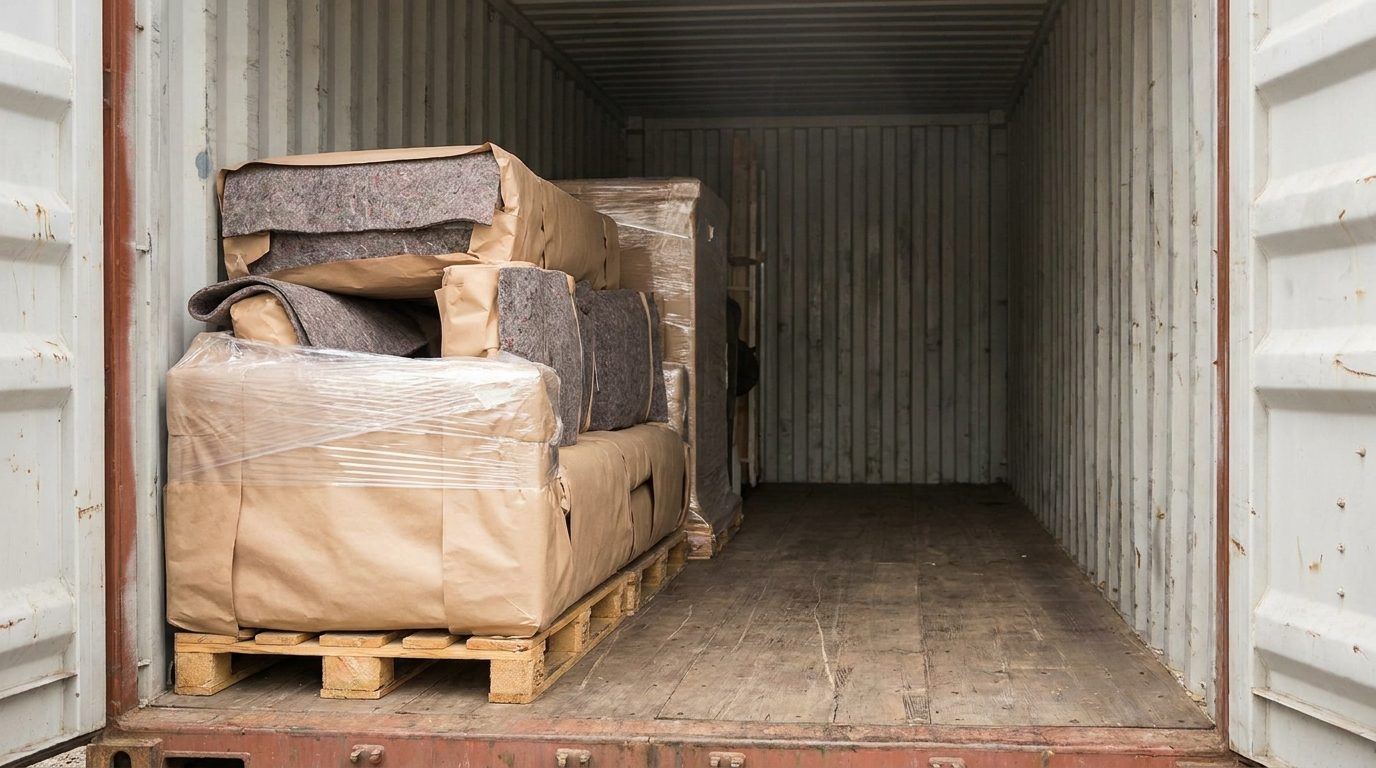
EXW is genuinely useful in one situation: a mixed container from many suppliers. Each factory quotes ex works, your consolidator collects from all of them, and you pay one line for inland transport instead of six. That is how most multi-supplier containers are actually built.
What EXW hides: inland trucking from Shunde or Longjiang to the port, export customs declaration, terminal handling at origin, and the labour to load. On a full container that is commonly USD 300–700 depending on distance and how many pickups.
FOB — free on board
FOB means the seller delivers the goods onto the vessel at the named port — FOB Nansha, FOB Yantian, FOB Shekou — and clears them for export. From the ship's rail onward, sea freight, insurance and everything at your end is yours.
This is the normal term for furniture, and the one to ask for by default. It puts the messy local part — trucking, customs paperwork, port handling — with the party who does it every week, and it leaves you free to choose your own shipping line and your own forwarder, which is where the real freight savings live.
One caution: FOB without a named port is not a term, it is a hope. Always write the port. And ask what is included in the local charges, because some factories quote FOB and then present an origin-charges invoice that was never mentioned.
CIF and CFR — cost, insurance, freight
CIF means the seller also books the ocean freight and buys the marine insurance to your destination port. CFR is the same without the insurance.
It sounds convenient, and for a first small shipment it can be. But you are letting the seller choose the carrier, and the seller's incentive is a cheap freight rate, not a good one. The classic CIF outcome is a low sea freight number paired with destination charges you cannot control — handling, documentation, an agent at your port you did not appoint and cannot argue with. Those charges can quietly exceed what you saved.
The insurance in CIF is also minimum cover, typically 110% of invoice value on restricted terms. For furniture, which is bulky and prone to handling damage rather than total loss, that cover is often the wrong shape.
DDP — delivered duty paid
DDP means the price includes everything to your door: freight, destination charges, customs duty, taxes and delivery. It is the only term where the number you are quoted is the number you pay.
It is also the term with the most room to hide margin, and in some lanes it is used to move goods under arrangements you would not choose if you saw them. If a DDP price for furniture into Australia or the EU looks impossibly cheap, ask who the importer of record is. If it is not you, your goods are entering on somebody else's declaration, and the paperwork trail you may need later — for duty, for warranty, for a compliance audit — does not lead to you.
Legitimate DDP exists and can be worth paying for on a first container, when you have no broker and no experience. Ask for the customs entry documents in your own name and keep them.
Which term to ask for
For a first container: FOB the nearest port, and appoint your own forwarder at destination. You will pay a little more than a headline EXW number and considerably less than a padded CIF, and you will own the paperwork.
For a multi-supplier container: EXW from each factory, with one consolidator handling collection, palletising and export. Ask the consolidator for a single quotation covering pickup to FOB so you can compare it against the factories' own FOB numbers.
For a hotel or project where a delivery date is contractual: consider DDP from a forwarder you appointed, not from the furniture factory, so that logistics risk sits with a logistics company.
The one line to add to every quotation
Whatever term you choose, write this into the pro-forma invoice: price includes export packing, export customs clearance and all origin charges; incoterm FOB [port], Incoterms 2020. Naming the version matters, because the 2010 and 2020 editions differ on who arranges what under FCA and DAP, and a factory quoting from memory is quoting from the version it learned first.
Then ask for the weights and dimensions of every carton on the same document. Freight is quoted on volume; a quotation without cubic metres is a quotation you cannot compare to any other.