Synthetic rattan, and how to buy the kind that lasts
Two outdoor sets can look identical and cost forty per cent apart. The difference is a polymer you cannot see and a stabiliser you cannot test by eye — but you can test by hand.
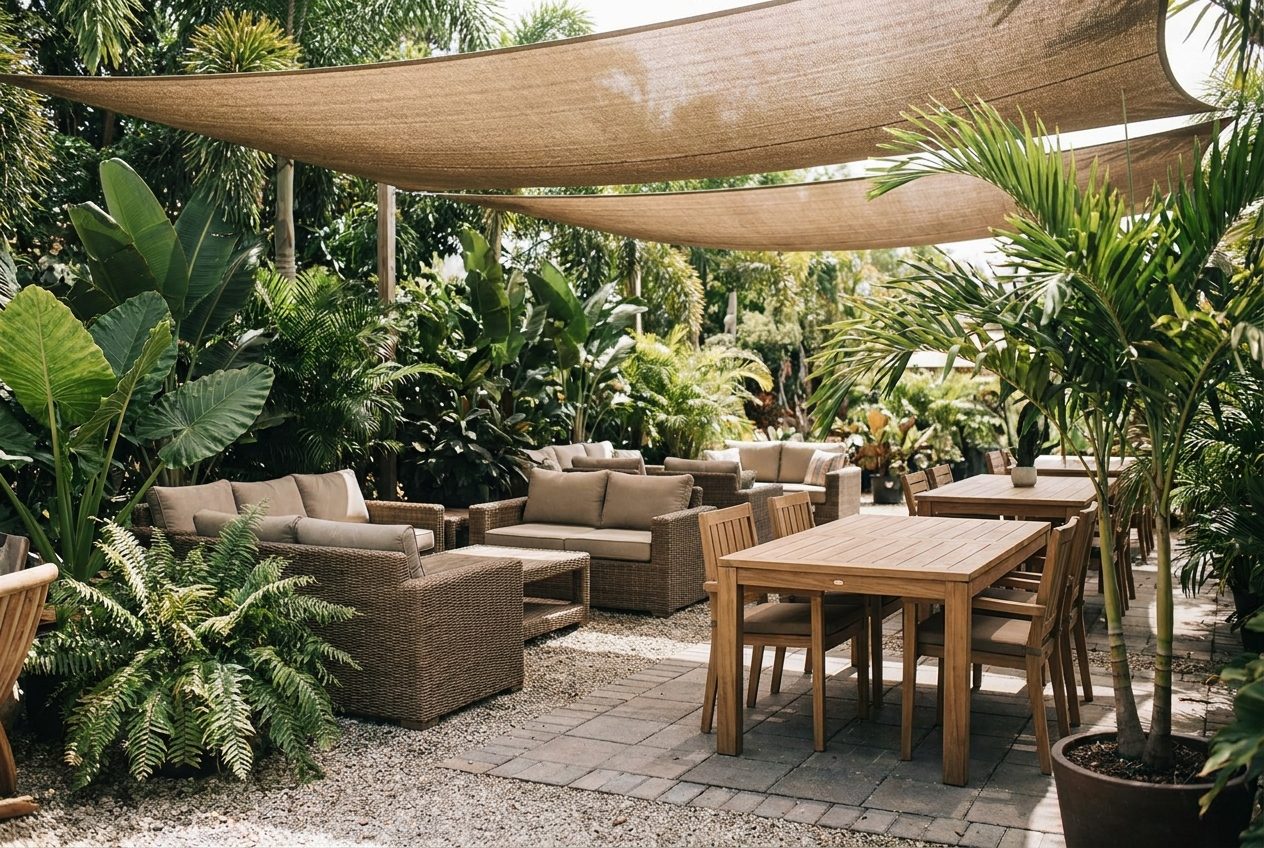
Synthetic rattan is one of Foshan and Zhongshan's biggest outdoor categories, and one of the easiest places to buy badly. The weave looks the same at every price. What changes is the material of the strand and what was mixed into it.
Understanding those two things is most of the category.
HDPE versus PVC
HDPE — high-density polyethylene — is the correct material for outdoor wicker. It is flexible across a wide temperature range, resists UV well when properly stabilised, and does not become brittle in cold or sticky in heat.
PVC is cheaper. It looks similar when new, and it fails in a specific and recognisable way: it hardens and cracks in cold, softens and stretches in sustained heat, and it discolours to a yellowish grey. In a hot climate a PVC set is a two-season product.
Ask which polymer, get the answer in writing, and put it in the specification. Then verify it, because this is the substitution that costs buyers the most in this category.
UV stabilisation, and what to ask
Polyethylene without additives degrades in sunlight. Quality strand contains UV stabilisers and antioxidants, and the good suppliers can tell you the loading and show a test.
Ask for a QUV or xenon-arc accelerated weathering report, with hours and the colour-change result. Ask what warranty the strand supplier gives — reputable European and Asian strand producers warrant against UV degradation for a stated number of years, and a factory buying that strand will name it.
For the Gulf, Australia and southern Europe this is not an upgrade, it is the specification. Ordinary strand in extreme UV fades visibly within one summer.
Tests you can do standing there
Bend a strand hard. HDPE bends and springs back with a soft whitening at the crease that recovers. PVC creases sharply, whitens permanently, and may crack.
Look at the cut end. Quality strand is solid and uniform through its section. Cheap strand shows voids, streaks or a different colour in the core, which means the surface colour is a skin.
Feel the temperature and the surface. Good strand feels waxy and slightly resilient. Hard, glossy, slippery strand is usually PVC.
Pull a strand at the frame. Weave that is stapled to the frame will unravel; weave that is wrapped, tucked and heat-sealed will not. Look underneath, where the finishing is either done properly or not at all.
The frame, the feet and the cushions
The frame under the weave should be powder-coated aluminium, not steel, and the coating quality matters as much as it does on a bare frame — a rusting frame under intact wicker is unrepairable.
Feet should be plastic or nylon with drainage, and the frame tube ends must be sealed. Water that gets inside a tube in a humid climate never leaves.
Cushions for outdoor use need quick-dry reticulated foam and solution-dyed acrylic covers. Standard foam in an outdoor cushion holds water and grows mould in a fortnight, and it is the most common reason an otherwise good set is thrown away.
What to write in the order
Weave: HDPE strand, [width] mm, UV stabilised, supported by accelerated weathering test report; strand supplier named. Frame: powder-coated 6063 aluminium, tube ends sealed, drainage feet. Cushions: reticulated quick-dry foam, solution-dyed acrylic covers, [gsm]. Weave terminated by wrapping and heat sealing, no staples.
Then keep a strand sample with the signed order. A twenty-centimetre piece of the actual material is the cheapest evidence you will ever hold, and it settles the argument if the second container looks different from the first.