Stone and sintered tops: choosing and shipping them
Stone tables sell themselves and break in transit. Getting them home intact is a specification problem, and it starts with knowing which material you are actually buying.
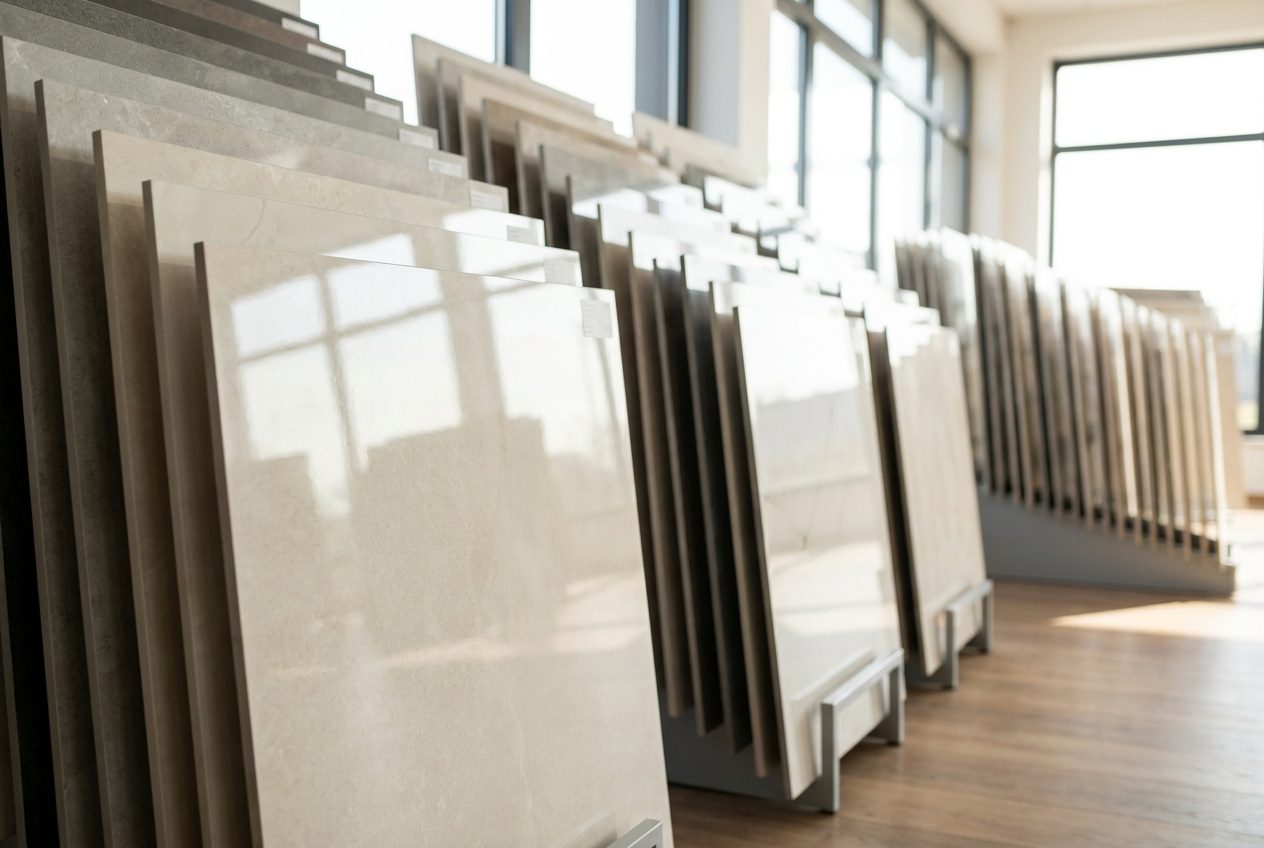
Walk any hall in Lecong and half the dining tables have a stone or stone-look top. The Chinese trade name that covers most of them — rock plate — is not a material, it is a marketing category, and underneath it are three quite different products at three price levels.
Choose the wrong one and the top scratches, stains or cracks. Pack it wrongly and none of that matters.
The four materials
Sintered stone is mineral powder pressed at very high pressure and fired at high temperature into a dense slab. It is highly resistant to heat, scratching and staining, and it is the best-performing top for dining use. The good ones come from a handful of large producers; the price gap between those and the cheap end is real.
Porcelain and ceramic slab sits just below sintered stone: thinner, lighter, less impact-resistant, still excellent against stains and heat. Frequently sold interchangeably with sintered stone, and the distinction is worth pressing on.
Natural marble is beautiful, porous and soft. It stains from wine, lemon and oil, and it etches. It belongs in projects where the client understands that and wants it anyway.
Engineered quartz is resin-bound quartz: harder than marble, stain-resistant, but sensitive to heat and prone to yellowing under strong UV, so keep it out of conservatories and away from Gulf sun.
Thickness, backing and edge
Sintered and ceramic slabs are typically 6, 12 or 15 mm for tabletops. Thin slabs need a backing — aluminium honeycomb or a bonded MDF core — and the backing is what stops a 6 mm top from cracking under a point load. Ask what the backing is and how it is bonded.
Edge profile drives both look and risk. A mitred edge that makes a 12 mm slab look 40 mm thick is beautiful and is also four glued corners waiting for an impact. A straight polished edge is far more robust. For shipping to a distant market, a simple edge is the safer specification.
For natural marble, ask about the sealer used and whether it is reapplied before packing. Unsealed marble picks up handling marks between the factory and the container.
Packing stone properly
This is where containers of stone tops go wrong. The specification you want is: each top in a plywood crate, not a carton; vertical orientation, never flat, because slabs crack under their own weight when stacked horizontally and shocked; foam or rubber corner blocks; and internal bracing so the slab cannot move inside the crate.
Crates should be marked this way up and do not stack on all sides, in English and Chinese, and the container loading plan should place them upright against the walls, secured, not in the middle where they can shift.
Order spares. Two to five per cent extra tops on a large order costs a fraction of air-freighting a replacement, and stone is the single most likely item in your container to arrive broken.
Inspecting before it ships
Check the pattern match if the tops are veined — sintered stone patterns repeat, and a set of six tables that all show the same distinctive vein in the same place looks like what it is. Ask how many pattern variants exist in the run.
Check flatness with a straight edge, check the underside for chips at the edges, and check that the bonding of the backing is complete rather than spotted with glue. Tap the surface lightly across the slab and listen for a change in tone, which indicates a void in the bonding.
Photograph every crate as it is packed. Stone damage claims are decided on whether the goods were undamaged when they went in, and photographs at packing are the only evidence that exists.
Where to buy them
Most Lecong dining suppliers will source the top from a slab producer rather than make it, which means you can often specify a better slab into the same table. Ask which brand of slab, and ask whether an upgrade is available — the price difference is usually modest and the durability difference is not.
If stone is a large part of your container, Foshan's ceramic district at Nanzhuang is twenty minutes away and buys the same slabs at source. A morning there can settle the material choice properly before you commit to a table supplier.