Foam density, and how to specify a cushion that lasts
A sofa fails on its foam long before it fails on its frame. Two numbers in the specification decide whether your customer is still happy in year three.
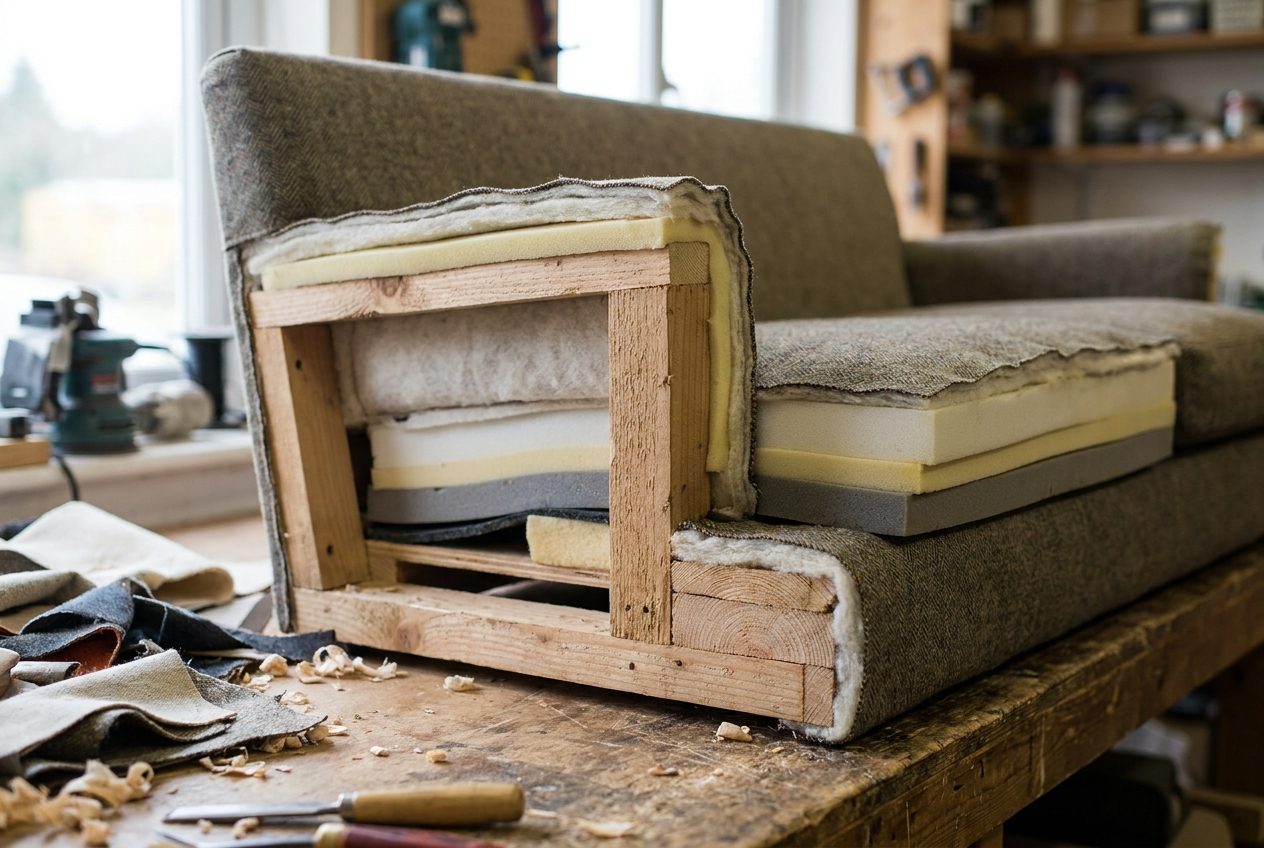
Every showroom in Lecong will tell you its foam is high density. The word means nothing without a number, and the number is the difference between a seat that recovers and one that becomes a hollow.
There are two numbers, and they are not the same thing.
Density and hardness are different
Density is mass per volume, expressed in kilograms per cubic metre. It measures how much material is actually in the foam and it is the single best predictor of durability. Hardness — usually quoted as ILD or IFD — measures how firm the foam feels. A foam can be soft and dense, or hard and cheap.
Confusing the two is how buyers end up with a firm-feeling sofa that collapses in a year: low density foam blown to a high hardness feels supportive in the showroom and has very little material in it.
Numbers worth specifying
For seat cushions in domestic furniture, ask for 30–35 kg/m³ as a floor and 35–45 kg/m³ for anything sold as quality. Below 25 is a foam that belongs in a display piece, not a product. For contract and hospitality, where the seat is used all day, 45+ or a high-resilience foam is the sensible specification.
For back cushions, lower density is acceptable and often preferable — 20–25 kg/m³ with fibre wrap gives the soft look buyers want. For arms and side fillers, 22–28 is normal.
Ask for high resilience (HR) foam where the budget allows. It costs more per kilogram and recovers far better over years of use.
Fire standards, by market
United Kingdom. The domestic upholstery fire regulations are the strictest in the world and require cigarette and match ignition performance for the filling, the cover and the combination, plus permanent and display labelling. Test on your exact fabric and foam pairing.
United States and Canada. California TB 117-2013 tests smoulder resistance of cover fabrics and is widely applied across North America. Many Dongguan factories work to it routinely.
Contract and hospitality anywhere. BS 5852 crib 5 and equivalent standards are commonly written into tender documents even in markets with no domestic law. Read the specification you are quoting against.
Australia and much of Asia. No mandatory domestic upholstery fire standard, though commercial projects frequently specify one contractually.
In every case the test must be on your combination. Fire performance is a property of the assembly, not of a foam sitting in a warehouse.
Showroom tests that take ten seconds
The press test. Press a seat cushion firmly in the middle and release. Good foam returns almost immediately with no dent. Cheap foam leaves a visible depression for a second or two.
The corner test. Sit on the front corner of the seat, not the middle. Cheap sofas are built with better foam in the centre panel, and the corner is where the truth is.
The weight test. Lift a loose seat cushion. Density has mass; a cushion that feels suspiciously light for its size is exactly that.
The zip test. Unzip a cushion cover if you can. You are looking for a foam core wrapped in dacron rather than a bare block, and for a foam that is one piece rather than glued offcuts.
The specification to write
Seat cushions: high-resilience polyurethane foam, minimum density 35 kg/m³, hardness [X] ILD, wrapped in 200 g dacron. Back cushions: 22 kg/m³ foam with fibre fill. Fire performance to [standard], tested on the ordered cover fabric and foam combination, test report supplied before shipment.
Then ask for a cut sample of the actual foam to be sent with the pre-production sample. Foam substitution is invisible once the cover is on, which is precisely why it is the most commonly substituted component in a sofa.