Aluminium frames, and why the coating is the product
Aluminium does not rust, which is why buyers stop asking questions. The failures happen in the four microns of chemistry between the metal and the paint.
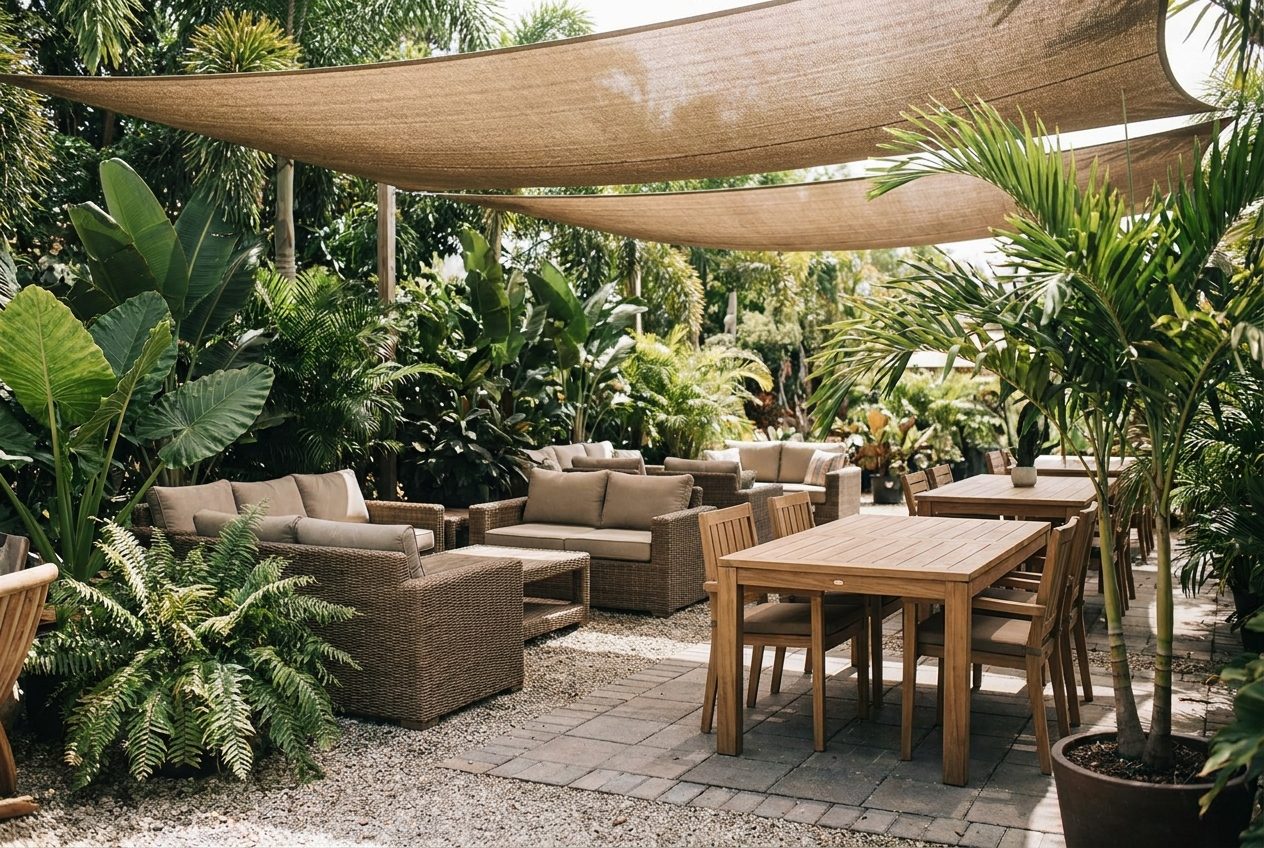
Outdoor furniture from Foshan and Zhongshan is overwhelmingly aluminium, and the sales pitch is always the same: aluminium, so no rust. True, and irrelevant. What fails on outdoor aluminium is the coating — it chalks, fades, blisters and lifts — and underneath it the metal begins to corrode in a fine white bloom.
The good news is that this is entirely controlled by four specification lines.
Pre-treatment: the part nobody quotes
Powder coating sticks to aluminium only if the metal has been chemically prepared. The traditional treatment is a chromate conversion coating; modern chrome-free equivalents perform comparably. Without it, powder adheres mechanically and lifts at the first scratch, taking a patch of coating with it.
Ask directly what pre-treatment is used and how many stages the line has. A proper line degreases, etches, desmuts, rinses several times with deionised water, applies the conversion coating and dries. A cheap line dips and sprays.
This is the single biggest quality difference between an outdoor chair that survives five Australian summers and one that looks tired after two, and it is invisible in the showroom.
Polyester versus super-durable powder
Standard architectural polyester powder is fine for most climates. Super-durable polyester, tested to a higher UV specification, holds gloss and colour substantially longer and costs a little more per piece.
For the Gulf, Australia, southern Europe, Mexico and anywhere else with severe UV, super-durable is the correct choice and the price difference is trivial against the warranty exposure. Ask for the powder brand and grade in writing — the major manufacturers' names appear on real factory documents and mean something.
Coating thickness should be 60–80 microns. Ask for the measurement, because thin coating is the commonest way to save money invisibly, and a coating gauge is a standard tool in any serious plant.
Alloy, wall thickness and welds
Frame tube is normally 6063 alloy. What varies is wall thickness, and that is where lightness turns into flex. For dining chairs ask for at least 1.2 mm, for loungers and larger frames 1.5 mm or more. A frame that flexes visibly when you lift it by one arm will loosen at the joints within two seasons.
Look at the welds before coating if you can, or at the coated weld lines if you cannot. Good welds are even and ground smooth; bad ones are lumpy, and the coating over them is thin at the peaks — which is exactly where corrosion starts.
Check the fasteners. Stainless steel screws in an aluminium frame are correct; zinc-plated steel screws in an outdoor product are a rust streak waiting to happen, and they cost a few cents to upgrade.
Showroom tests
The coin test. Ask permission, then drag a coin edge firmly across the underside of a frame. Good coating marks; bad coating flakes.
The tape test. Serious factories will run a cross-hatch adhesion test for you — a grid scored into the coating with tape pulled off it. If the plant has never heard of it, that answers the pre-treatment question.
The lift test. Pick the chair up by one arm and feel for flex and for creaking at the joints.
The underside test. Turn it over. Cost-cutting is always on the surfaces nobody photographs — uncoated cut ends, unplugged tube ends that will fill with water, feet with no drainage.
The specification lines
Frame: 6063 aluminium, wall thickness [X] mm, TIG welded and ground. Pre-treatment: multi-stage chemical conversion coating. Finish: super-durable polyester powder, [brand and grade], 60–80 microns, colour [reference]. Fasteners: stainless steel A2 throughout. All tube ends sealed; feet with drainage.
Then ask for a salt-spray test report if the goods are going to a coastal market. Two hundred hours or more is a reasonable benchmark for outdoor aluminium, and the factories that can supply the report are the factories that can supply the furniture.