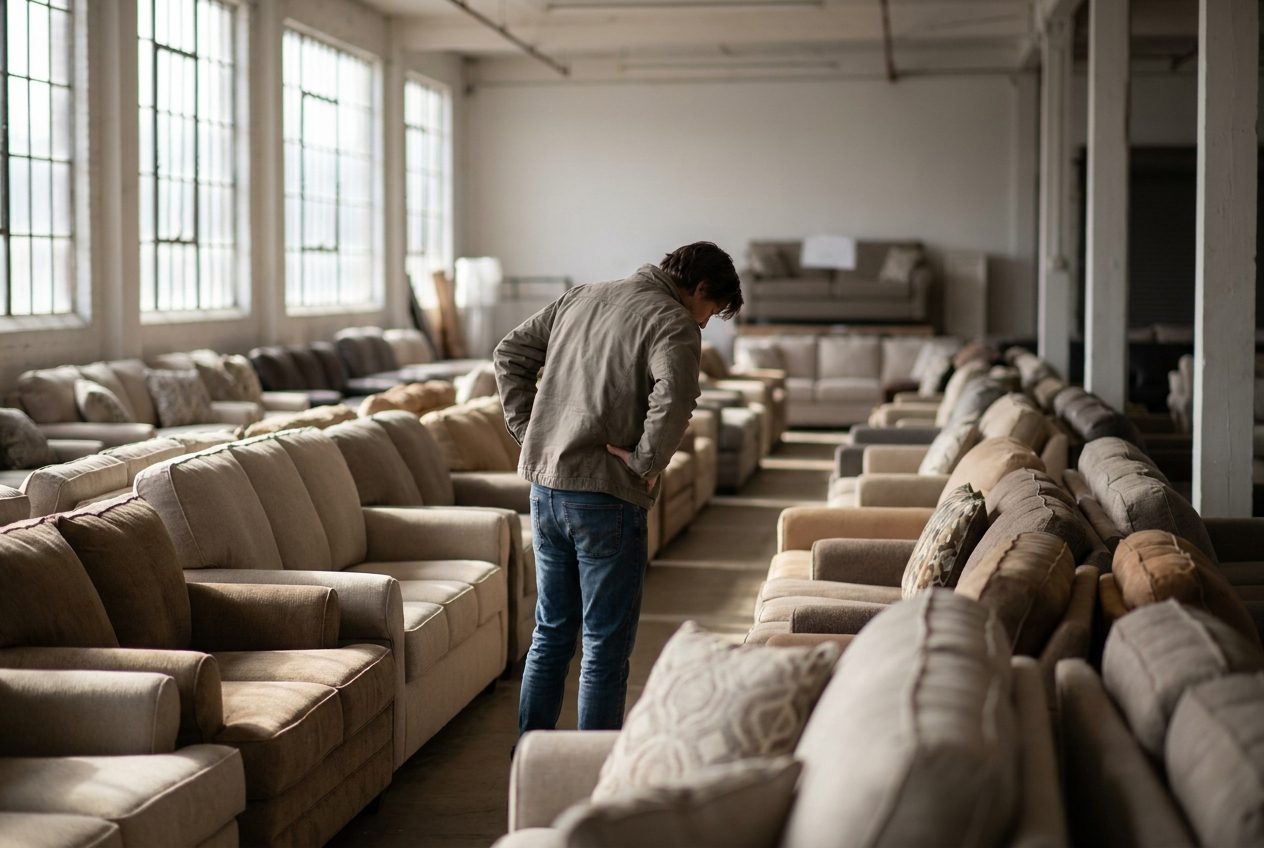
Buying sofas in Foshan: what is actually inside them
Two sofas that look identical in a showroom can be very different products. The difference is entirely inside.
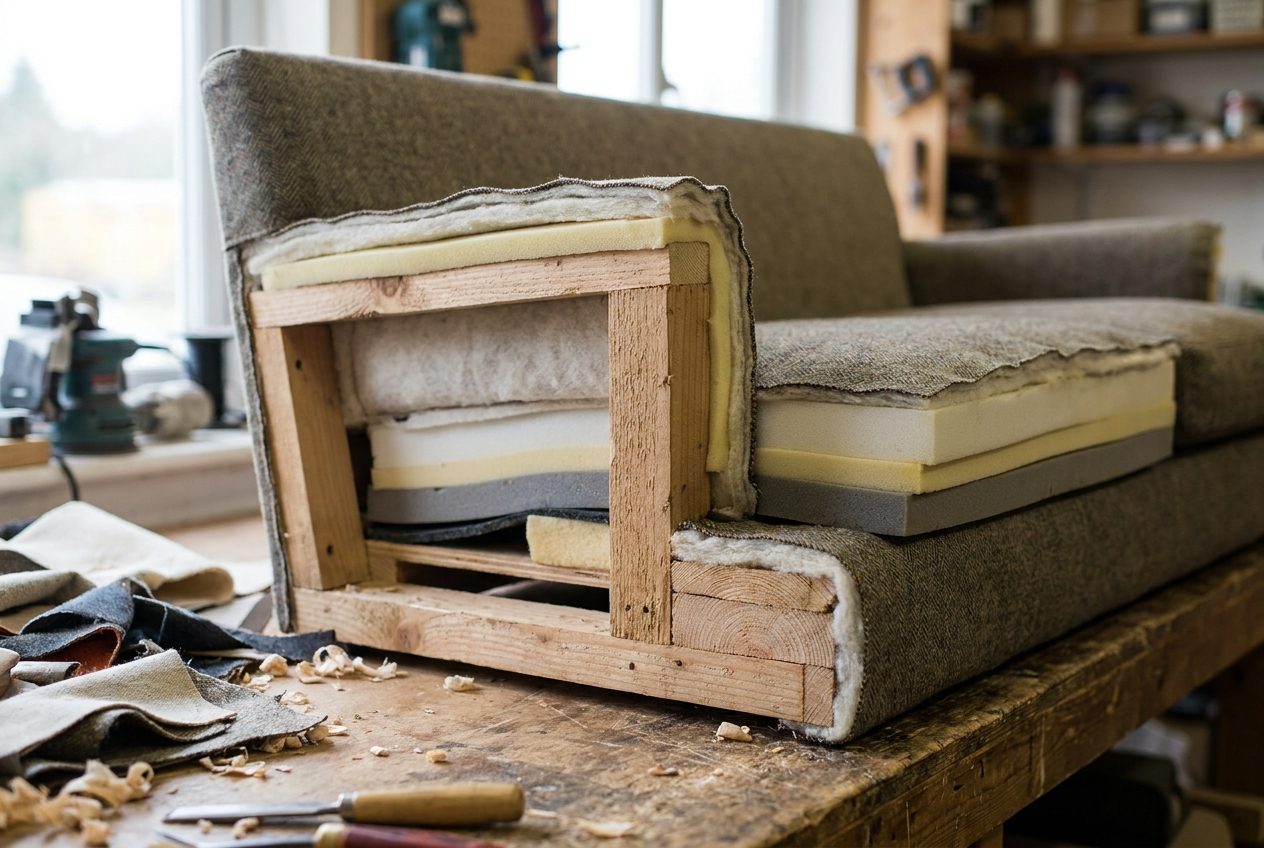
Upholstery is the largest single category in the Foshan market and the one where the gap between what you see and what you get is widest. A sofa is mostly hidden. What is hidden is what determines whether it is still a good sofa in three years.
The frame
Everything else sits on this. What you want to know is the timber and whether it has been kiln dried. Properly dried hardwood is stable in a dry, heated climate. Timber that has not been dried adequately moves after it leaves Guangdong’s humidity, and moving frames produce creaks, loose joints and eventually failures.
You can learn a surprising amount by lifting a corner. A frame with substance has weight. You can learn more by looking underneath, where the joints and the timber are visible and nobody has tidied up for display.
The suspension
Under the cushions there is either webbing, serpentine springs, or a pocket sprung unit, and they behave differently over time. None is automatically right. What matters is that you know which one you are buying, and that the price reflects it. This is a question that gets a straight answer if you ask it directly.
The foam
Comfort in a showroom is meaningless. Every sofa is comfortable for ninety seconds. Foam density is what determines whether the seat is still supporting somebody after a year of daily use. Ask for the density figure, and ask what the back cushions are filled with, because a fibre filled back and a foam back age very differently.
Press a seat hard and watch it recover. Slow, incomplete recovery in a brand new showroom piece is a clear signal.
The fabric
Two things to establish. Whether the fabric is held in stock, because if it has to be ordered it sits on the critical path of your lead time. And what grade it is, because fabric grade is one of the easiest places for two quotations to diverge invisibly.
If durability matters for your market, ask about rub test figures. If it does not, a lower grade in the same range is often the smartest saving available, because the customer sees the colour and the shape, not the specification sheet.
The bits people forget
- Legs. Removable legs pack better and ship cheaper. Ask.
- Cushion covers. Zipped covers are worth a great deal in a market where customers expect to clean things.
- Mechanisms. On recliners and sofa beds the mechanism is the product. Ask who makes it.
- Packed dimensions. Sofas are the bulkiest thing in most containers, so how they pack drives your shipping cost more than any other item.
The showroom test that takes two minutes
Sit down properly, not perched. Lean back hard into the corner where the arm meets the back, which is the joint that takes the most abuse. Run a hand along the seam lines and look at how the pattern is matched. Lift one end. Look underneath. That sequence tells you more than any brochure.
Getting the specification written down
Everything above is only useful if it ends up on the quotation. Frame timber, dried or not, suspension type, foam density, fabric name and grade, leg type, packed dimensions. A supplier quoting against that specification is quoting against the same product as everyone else, and only then does comparing prices mean anything.
This is also the conversation that goes noticeably better in Chinese. The vocabulary is technical, the answers are detailed, and a buyer working through a language gap often receives a simplified version of a very specific answer. It is the single clearest place on a buying trip where having someone alongside you changes what you actually learn, rather than just how comfortable the day is.